let’s bring back the dinner table
I’ve always felt like objects are more than just ‘things’. I can become strangely attached to certain items. It’s almost as though they have their own personality and unique essence.
Sometimes I wonder if it’s due to the effort of thoughtful curation, or the care that goes into looking after the things we acquire - there’s a genuine diligence that’s behind so many of my belongings that make them feel part of place.
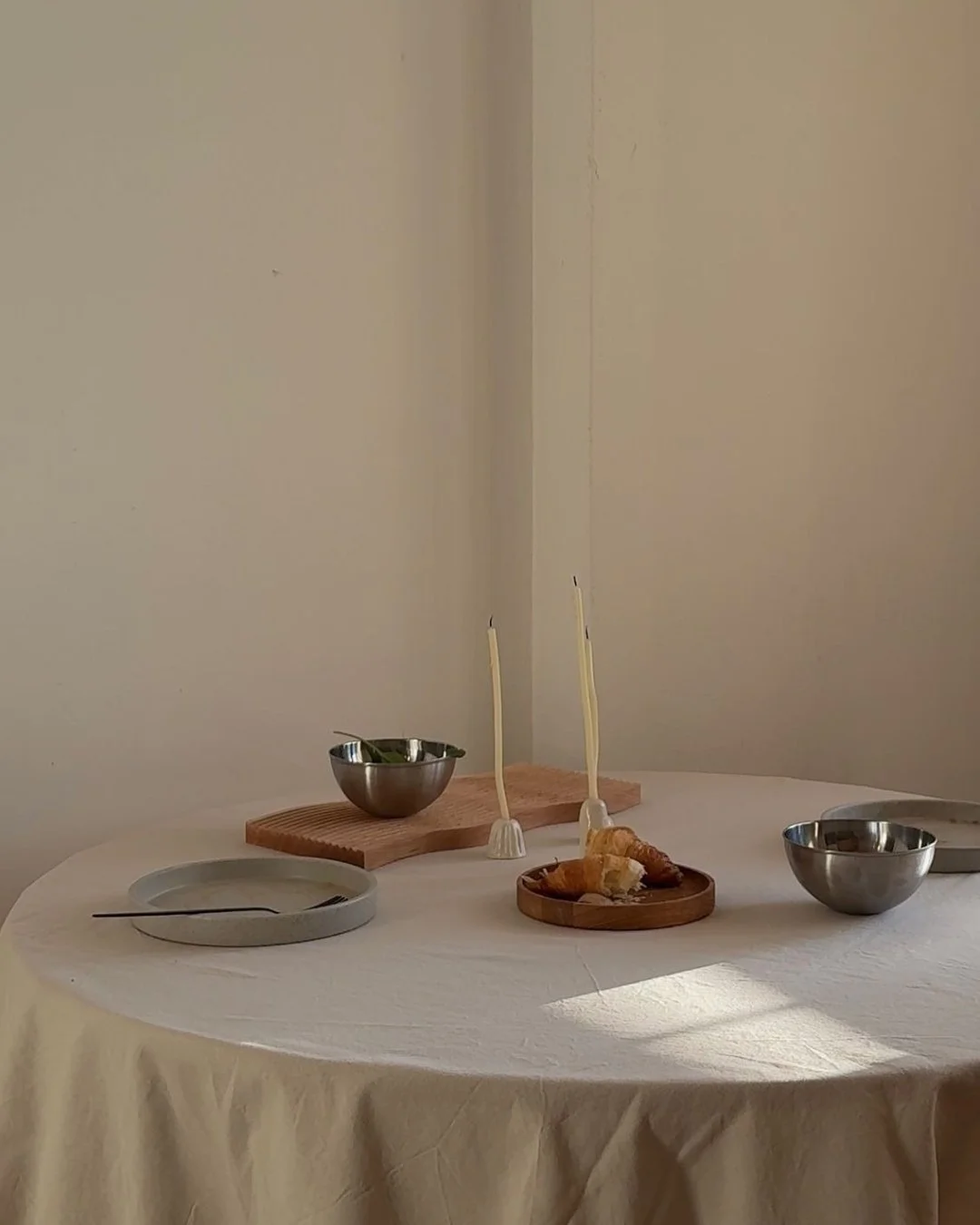
Image Source: Pinterest > bariinova.s
These things matter because they create an atmosphere of beauty that can influence how we feel, but perhaps some of the most memorable pieces are the ones we get to establish a ritual and an experience around. This could not be more true for the dining room table.
The table is such a hardworking, humble piece of furniture when you think of its practical uses - eating, drinking, working, creating - a sturdy and reliable backdrop for many of life’s daily activities.
But maybe its most important role is a stage for ordinary moments that slowly accumulate into something that’s not ordinary at all - identity.
It’s stories, jokes, unexpected questions, highs and lows of the day, exciting news, difficult conversations and of course most importantly - the dining room table gives us an opportunity to be present in a way other furniture can’t.
Because of this, its unique benefits are worth exploring.
The surprising benefits of eating at the table - conversation
One of the most fascinating aspects of eating at the table is that conversation becomes remarkably different from conversation elsewhere.
For example, when we’re driving, we’re watching traffic. When we’re walking, we’re navigating our surroundings and when we’re scrolling or watching TV, our attention is fragmented.
But around a table, everyone occupies the same physical level. Things like eye contact become effortless, pause becomes normal and the cadence of conversation naturally unfolds.
Psychologists describe this as a form of alignment referenced as “social synchrony”. It’s the subtle coordination of attention, facial expression, voice and body language that allows humans to feel understood and connected.
Shared meals can create this synchrony because everyone is participating in the same activity at the same pace.
Interestingly, research has also shown that children whose families regularly share meals tend to demonstrate stronger language development and larger vocabularies, largely because dinner conversations expose them to richer, more varied language compared to everyday instruction such as - “Put your shoes on”, “Brush your teeth”, “Time for bed”.
The surprising science of slower eating
It sometimes feels that today’s modern life rewards efficiency, but the practice of eating works differently.
When meals happen standing up, while answering emails or between appointments, the body often remains in a mild state of alertness. Digestion, however, functions best under almost the opposite conditions.
The parasympathetic nervous system - often referred to as the “rest and digest” response - supports healthy digestion by increasing saliva production, stomach secretions and intestinal activity. Slowing down during meals helps activate this system.
Eating more slowly has also been associated with:
improved recognition of fullness
lower likelihood of overeating
better blood sugar regulation
greater meal satisfaction
improved digestive comfort.
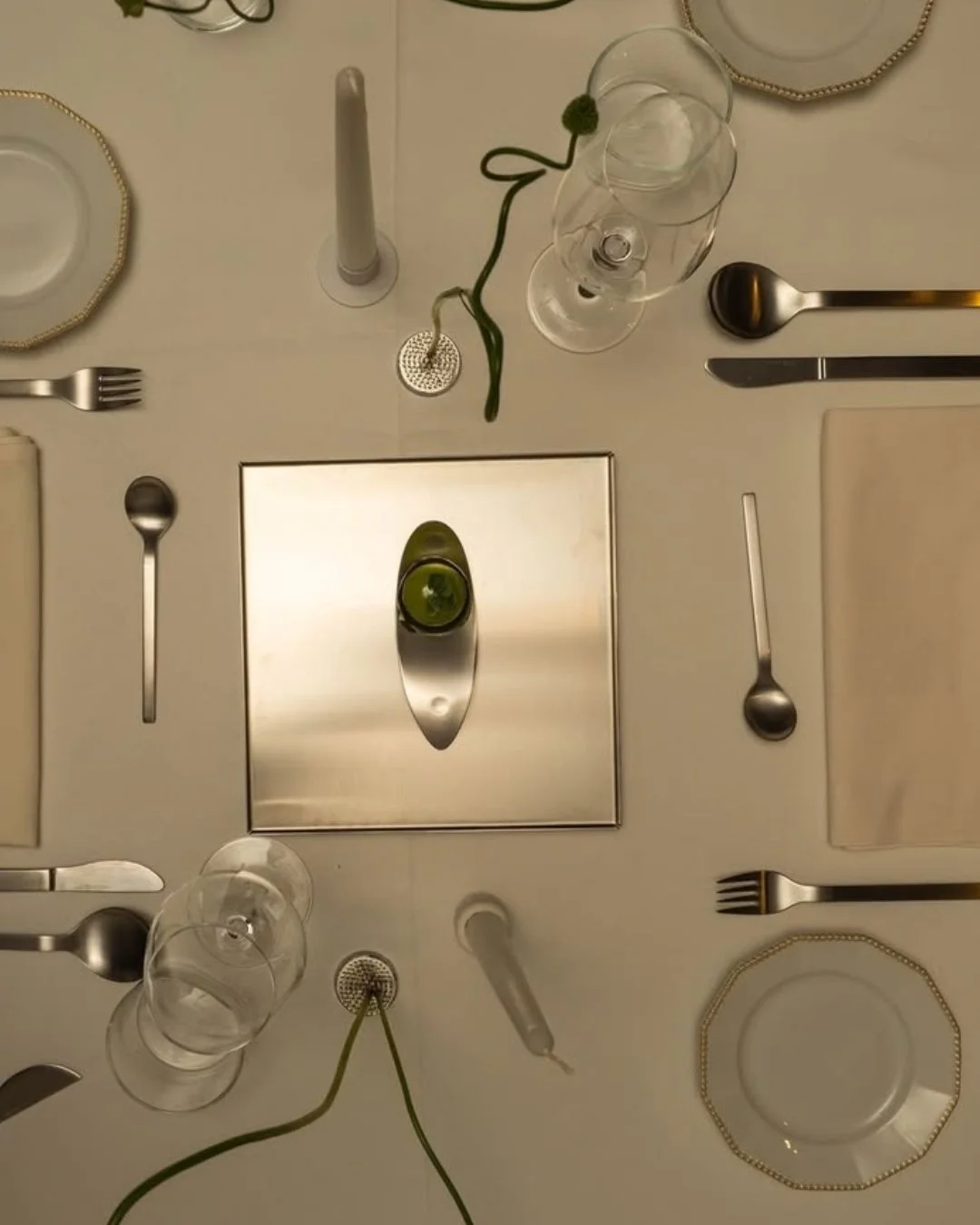
Image credit - Pinterest > industrialkonzept
The surprising benefits of eating at the table - belonging
Humans are profoundly social creatures, and evolutionary psychologists believe communal eating helped establish trust, cooperation and group survival long before modern civilisation.
Even today, sharing food remains one of the strongest non-verbal signs of acceptance across cultures.
Eating together also communicates something difficult to measure but easy to feel - you belong here.
Repeated moments of predictable connection become emotional deposits that accumulate over time, gradually strengthening our sense of belonging to one another.
Psychologists have long recognised that belonging is one of our most fundamental human needs, influencing everything from our mental wellbeing to our physical health.
Maybe this is why sharing a meal or coffee at a table - be it at home or even in a cafe or restaurant setting feels so restorative. It isn’t simply that we’re eating together; it’s that, for a little while, we experience the reassurance of being seen, included and part of something larger than ourselves - togetherness.
The surprising benefits of eating at the table - ritual
The benefits of eating together is less about what you eat, but the ritual itself.
Anthropologists have observed that rituals reduce uncertainty because they create predictable moments within daily life. Predictability gives our brains a sense of safety. Safety allows attention to shift away from survival and towards connection.
This may explain why many people remember childhood dinners with such warmth, even if the food itself was completely ordinary.
The ritual became the memory and that’s such a beautiful thing to cultivate whether that be during young family life, with flat mates and friends, or between two people who care for each other.
The surprising benefits of eating at the table - a place to stay
The dining room table can be an invitation to stay. For this to be an accepted practice, it must first be welcoming, and that means creating an environment that allows people to lean in.
A table that is a surface for collection - eg; piles of paperwork, unfinished tasks, washing or things that need to be put away, doesn’t communicate connection or togetherness. Keeping a table somewhat clear and open remains a practical place to drop into daily ritual.
The atmosphere is equally important. Humans love mood and associate it with key parts of the day. Things like comfortable seating, warm lighting, a beautiful centre piece (if size permits), or lighting a candle before a meal can really enhance the experience of daily dining.
The surprising benefits of eating at the table - attention
We often speak about mindfulness as though it requires meditation but there are so many small moments that can allow us to drop into the moment and centre our attention.
Eating at the table is one of them.
Staying seated, tasting our food, dialling into conversation, engaging with eye contact and deliberateness, choosing focus over distraction - all of this is a practice of mindfulness.
What a way to feel renewed.
Attention has become one of the rarest resources in modern life. The dining table creates one of the few environments where this still happens naturally.
More Than a Place to Eat
Perhaps the most surprising benefit of eating at the table is that it asks so little of us while giving so much in return. It creates space for conversation, encourages us to slow down, supports healthier digestion, nurtures a sense of belonging and transforms an ordinary meal into a meaningful ritual. It reminds us to stay a little longer, to pay closer attention and to notice the people sitting across from us rather than the distractions competing for our time.
In many ways, the dining table is where the philosophy of a home comes into focus. Because it isn’t just a place to eat, it’s where we cultivate connection, compose memories and reinforce the rhythms that make a house feel whole.
Join Mode
Or, if you’re interested in learning more about the psychology of interiors, the philosophy of beauty and creating a home that supports clarity, calm and modern living, subscribe to MODE, our weekly editorial exploring the intersection of design, wellbeing and the art of living beautifully.
Subscribe to MODE and join the conversation - delivered to your inbox weekly on a Sunday.