the surprising benefits of living with art
If you’re anything like me, you may find choosing art to be crippling at times. Picking paint and tiles is a piece of cake, but I can dance around for hours, sometimes even days, trying to find the perfect art piece for my clients.
In comparison to furniture and architecture, art can seem like a small detail, but somehow it has the power to make a room feel undeniably more alive.
This is because it turns out art is more than just a ‘final layer’ or special touch. Psychology suggests that the benefits of art curation go way beyond aesthetics.
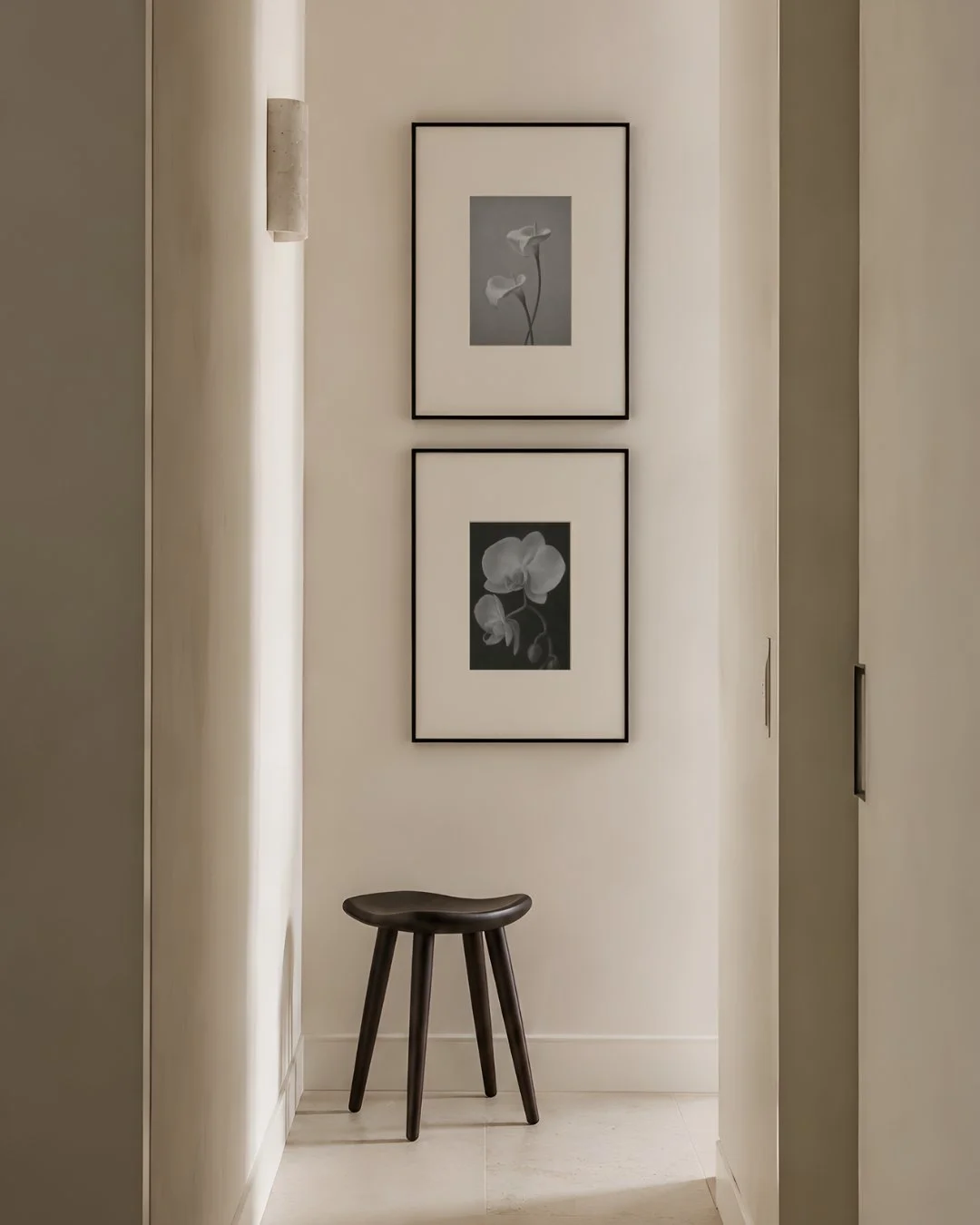
Image Source: Marx & Co - Botanica Collection
Humans and art - a longstanding relationship
I’ve always been intrigued by the relationship people have with art and why humans have instinctively sought out visual artistry for tens of thousands of years.
It seems art is a very primal aspect to our existence. Long before homes had electricity or running water, they had art. This is true even before there were cities, books or developed alphabets.
Some of the earliest surviving artworks are more than 50,000 years old, suggesting that the impulse to create beauty and express ideas is not new, but one of our oldest inclinations.
Archaeologists believe these early images were more than decoration. They likely reflected symbolic thinking and may have helped people tell stories, share beliefs, preserve knowledge or express experiences that words alone could not capture.
The consistency of this behaviour tells us something important - our relationship with art isn’t accidental, it’s entrenched in who we are as humans.
So, it’s no wonder that to this very day, art still moves us. Every piece, at its core, is one human mind reaching out to another. The artist translates an emotion, observation or idea into something visible, and decades, or even thousands of years later, another person can stand in front of it and recognise something in themselves.
Across time, cultures and generations, art creates a conversation that doesn’t require a shared language. It reminds us that the human need to create, and the equally human need to connect with what others have created, are deeply intertwined.
In recent years, researchers in psychology and neuroscience have begun to understand why.
How art impacts the brain
The moment we encounter a work of art, our brains begin processing far more than colour or composition. Studies in neuroaesthetics - the science of how the brain experiences beauty - have shown that viewing art activates networks associated with emotion, memory, reward and meaning. Rather than being a passive visual experience, looking at art is an active conversation between what we see and everything we’ve lived.
This is quite frankly mind blowing and it explains why the same artwork can evoke entirely different emotions in different people. Art isn’t simply viewed. It’s interpreted through our memories, experiences and identity.
Art reminds us of who we are
The pieces we choose often say more about us than we realise.
Whether it’s a minimalist photograph, a bold abstract piece or a treasured family painting, the artwork we surround ourselves with reflects our values, aspirations and memories. Psychologists describe this as the “extended self”. This fascinating idea suggests that our possessions become expressions of identity.
In this way, living with art becomes an ongoing conversation with ourselves. It reminds us of what moves us, what inspires us and what we want more of in our lives.
There’s a kind of self-awareness in knowing this that can feel strangely grounding.
Art gives the mind somewhere healthy to wander
In modern times, art gives us an additional benefit - an increasingly rare opportunity to slow down.
When we spend time looking at artwork, our attention shifts away from problem-solving and towards quiet observation. Psychologists have found that this type of gentle, sustained attention can reduce mental fatigue, restore cognitive resources and create a greater sense of calm. In many ways, art acts as a visual exhale.
It helps regulate emotion
One of the greatest psychological benefits of visual imagery is its ability to help us process emotion without requiring words.
A photograph can evoke nostalgia. An abstract painting can mirror feelings or thoughts, and a landscape may remind us of somewhere we feel safe. These experiences aren’t imagined - they reflect the brain’s remarkable ability to use visual information to organise emotion.
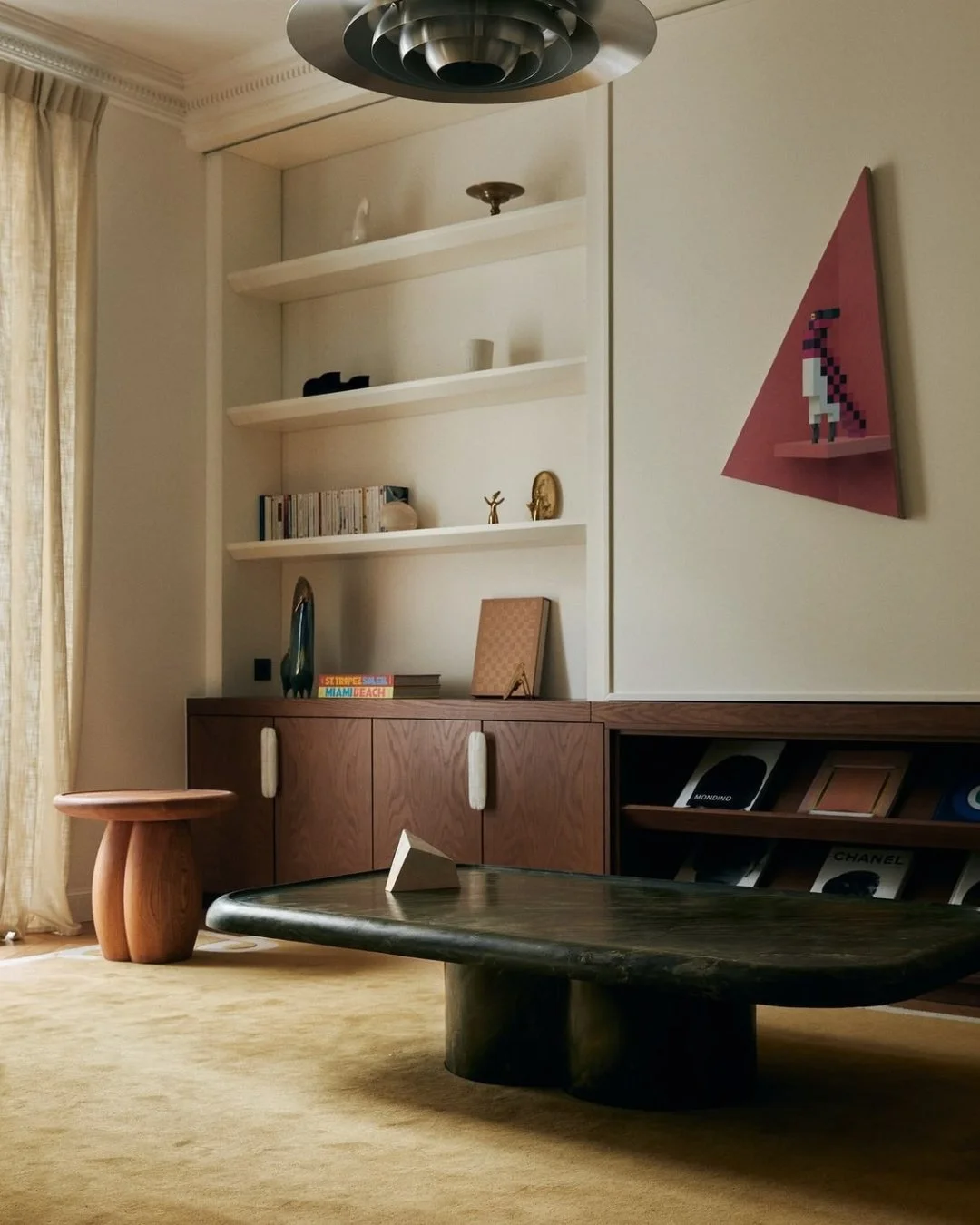
Image credit - Pinterest > Studiovlach
Research has consistently linked engagement with art to lower stress levels, improved mood and greater overall wellbeing. Even simply viewing art in hospitals, workplaces and homes has been associated with more positive emotional states.
Our homes shape our minds
Environmental psychology has shown that the spaces we inhabit influence how we think, feel and behave. Our homes are not passive backdrops but a huge and very important part of our daily psychological environment.
Every object sends a subtle signal to the brain.
As explored, art has a unique ability to anchor a room emotionally. It introduces narrative, personality and meaning into a space in a way that furniture alone rarely can. It transforms a house from somewhere we live, into somewhere that reflects who we are, and that’s worth recognising when introducing new pieces into our spaces.
Beautiful art is more than meets the eye
The pieces we choose become part of the scene. They’re there in conversations, celebrations, ordinary Tuesday mornings and our hardest days. They 100% become part of how life feels.
So if you’ve ever wondered whether art is worth making room for, the evidence points to a simple answer - yes.
Happy curating.
Marx & Co. The Label has a number of works to help get you started here.
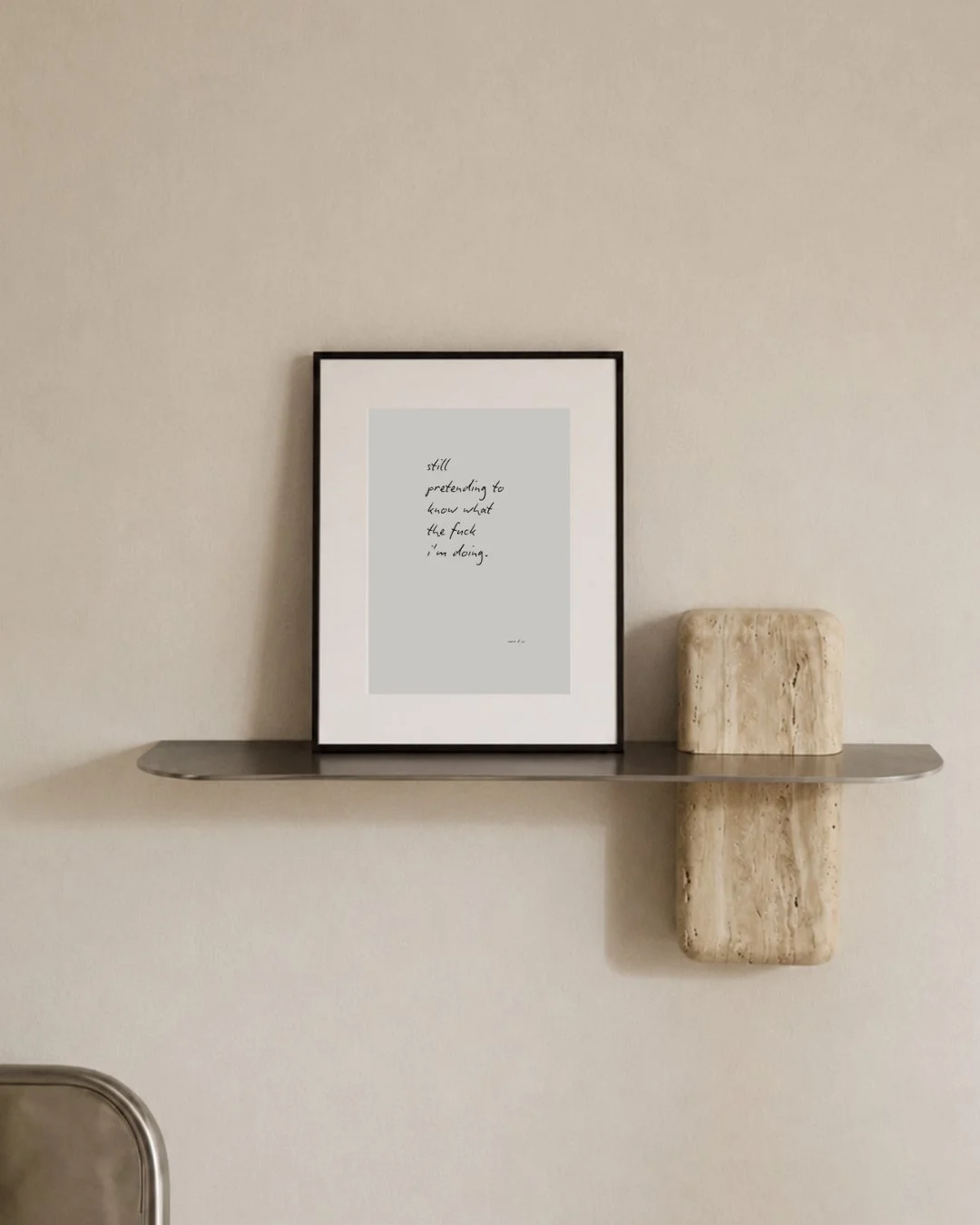
Image Source: Marx & Co - Monologues Series
Join Mode
Or, if you’re interested in learning more about the psychology of interiors, the philosophy of beauty and creating a home that supports clarity, calm and modern living, subscribe to MODE, our weekly editorial exploring the intersection of design, wellbeing and the art of living beautifully.
Subscribe to MODE and join the conversation - delivered to your inbox weekly on a Sunday.
References
Chatterjee, A. The Aesthetic Brain: How We Evolved to Desire Beauty.
Skov, M., & Nadal, M. Research in neuroaesthetics exploring how the brain processes aesthetic experiences.
Ulrich, R. S. (1984). View Through a Window May Influence Recovery from Surgery. Science.
Kaplan, S. (1995). The Restorative Benefits of Nature: Toward an Integrative Framework. Journal of Environmental Psychology.
Fancourt, D., & Finn, S. (2019). What Is the Evidence on the Role of the Arts in Improving Health and Well-being? World Health Organization.
Recent systematic review: Viewing Art for Wellbeing: A Systematic Review of Psychological Outcomes (2025), The Journal of Positive Psychology.