the capsule home: design your home like your wardrobe
We’ve all heard of the capsule wardrobe…
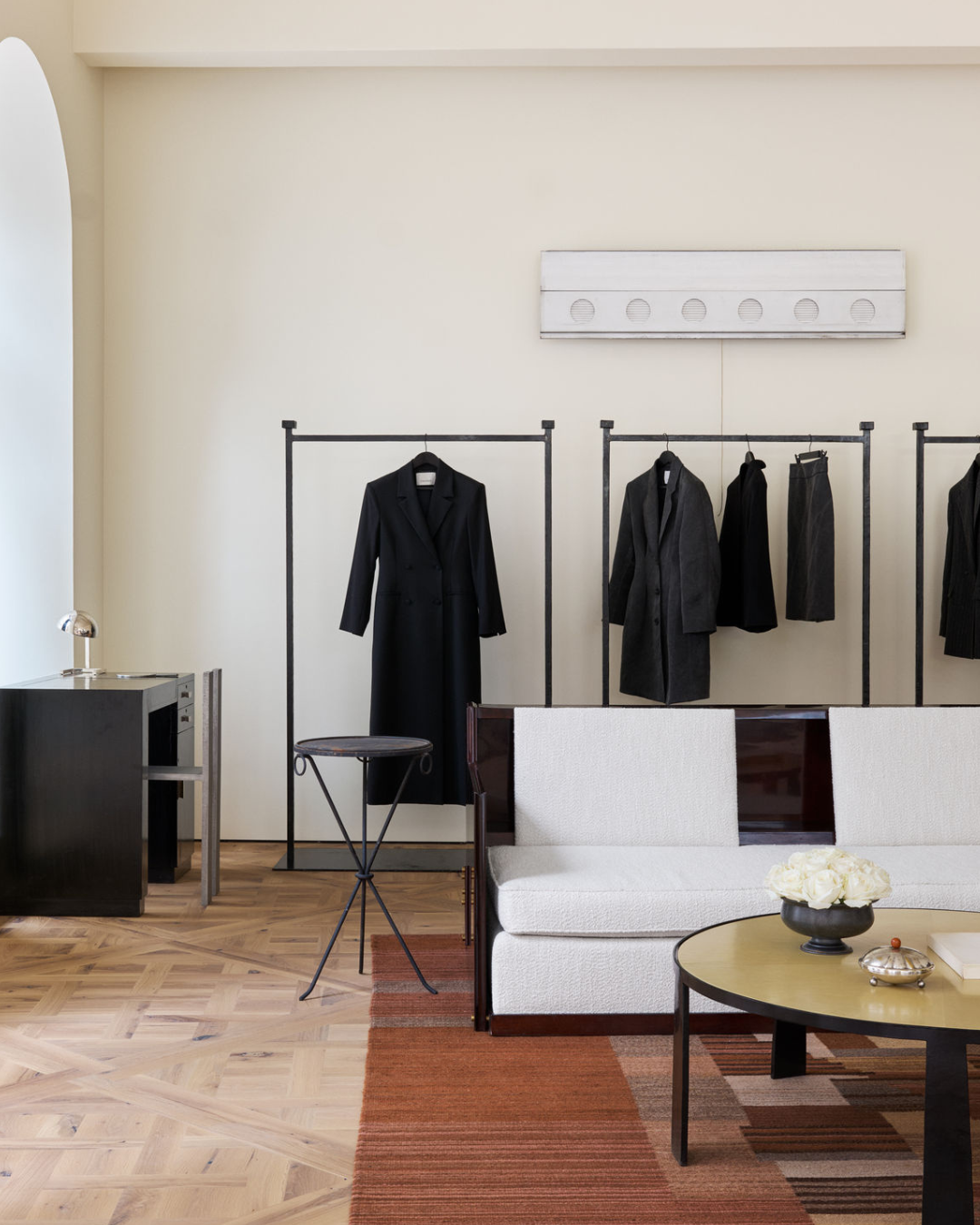
Image Source: Pinterest - House of Dagmar
A carefully curated collection of versatile, high-quality clothing pieces that work together effortlessly. Ideally, these garments are classic pieces that remain timeless throughout the seasons and are easy to mix, match and create endless new looks from.
The core concept is to maximize versatility with a select number of pieces. The result is a chic wardrobe that never feels dated and offers a range of sophisticated style. The same approach can also be taken with jewellery, shoes and accessories.
I’ve been building out my capsule collection for quite some time now and recently realised that the same technique is a no-brainer method for interiors too.
It makes perfect sense. Homes can often become accidental storage units for impulse purchases, trend-driven décor and pieces we never truly loved to begin with.
Unlike a wardrobe where clutter hides behind closed doors, a home visually communicates with you all day long. Every pile, every unnecessary object and every surface that is filled for the sake of it, silently asks for attention.
This could be why people feel overstimulated and overwhelmed in their homes. It could also even be the reason why it’s so easy to fall into the trap of, ‘We need a bigger house,’ or ‘It’s time to renovate’.
But really, the solution may not have to be so drastic.
It’s about creating a home that functions like a beautifully edited wardrobe - intentional, adaptable, enduring, elevated and reflective of who you are.
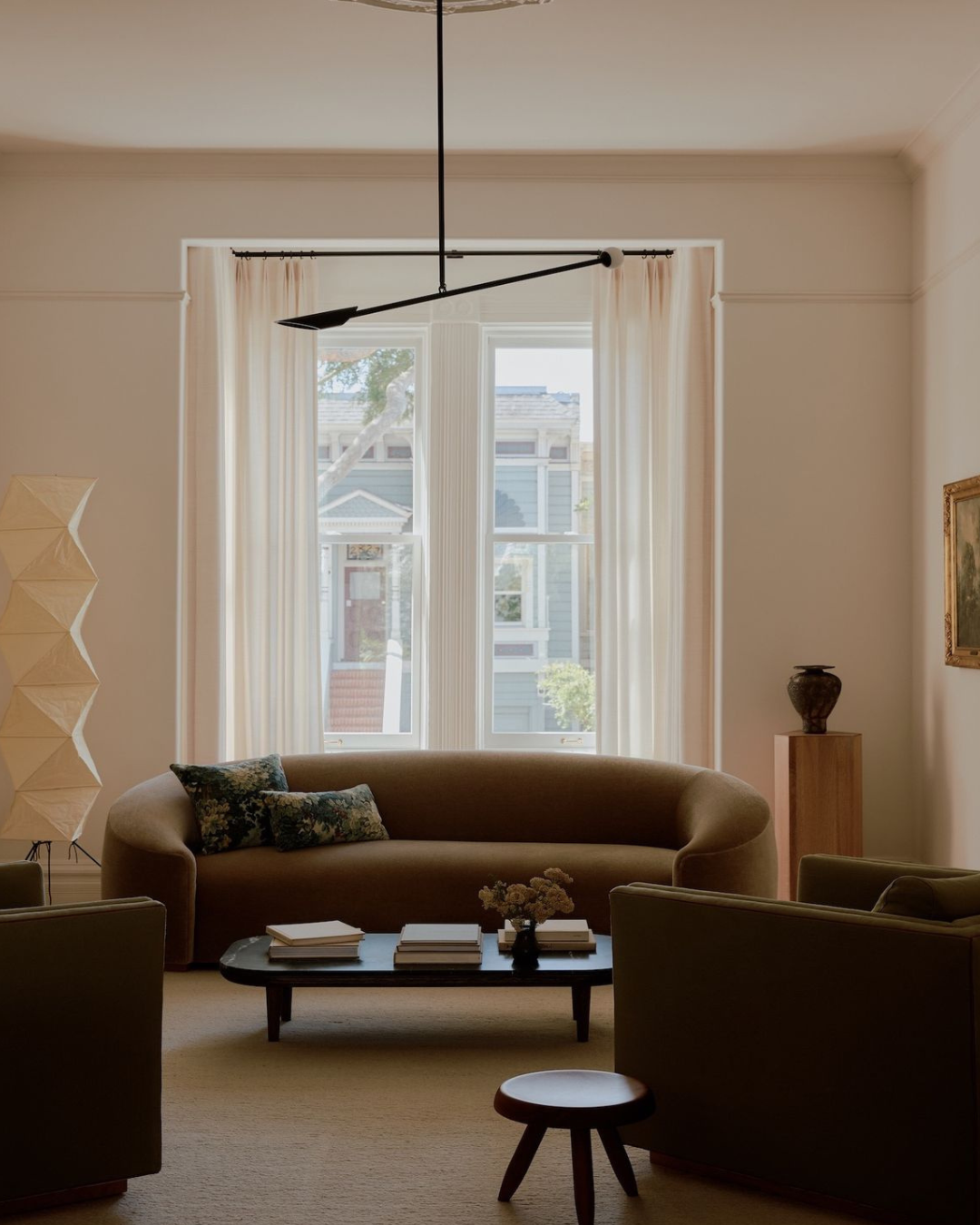
Introducing, The Capsule Home
I call this The Capsule Home.
A home built on fewer, better pieces that work together harmoniously.
A home that feels curated and design-led
A home where your collections can be mixed, matched, moved around and edited as required.
A home that supports your lifestyle rather than overwhelms it.
The Capsule Home Breakdown
Very similar to a capsule wardrobe, it’s about getting your staples right. For example a classic white shirt, the perfect pair of blue jeans, a black blazer, a white tee (or in my case many), black tailored pants, neutral knitwear, an LBD, a nude trench or coat, white sneakers, quintessential loafers and the list goes on…
These items become a core backdrop - where simple signature pieces are layered together resulting in iconic style that doesn’t date.
The Capsule Home equivalent does exactly the same thing.
But how does this actually translate from wardrobe to interiors? If I were starting a Capsule Home from scratch this would be my go-to starting list.
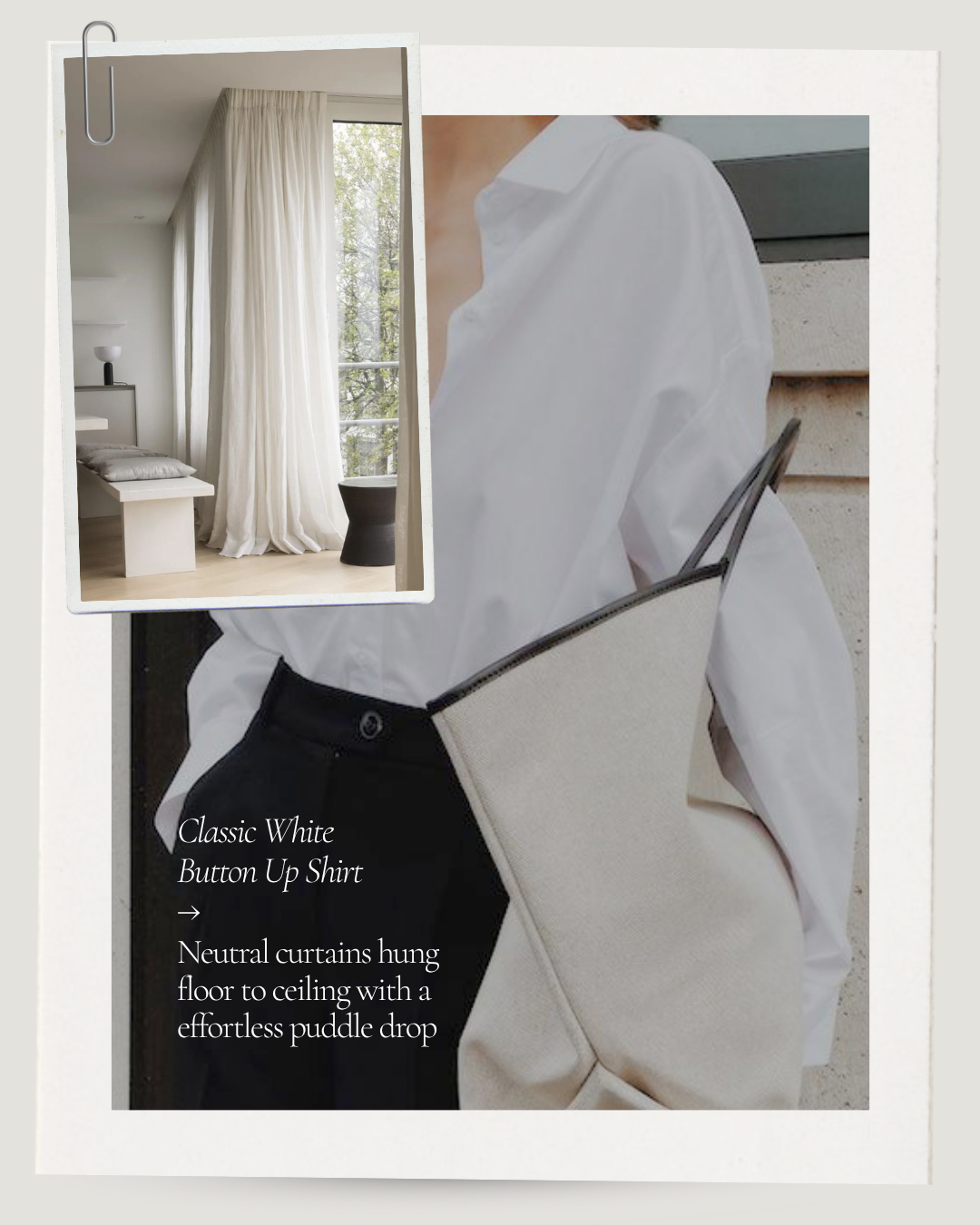
White Button-Up Shirt > Home Equivalent: Natural Fibre Curtains
Look for white, ivory, oatmeal or soft neutral curtains that are hung floor to ceiling in a cotton, linen or natural blend. This will frame and soften windows creating an elegant, warm and layered feel. Opting for a neutral in the main areas of the home means they’ll work with your entire interior scheme and not run the risk of dating or clashing with other design decisions.
Perfect Blue Jeans > The Every-Day Upholstery
Ok, don’t freak out, I’m not asking you to dress everything in denim…
Look at it like the ‘blue jeans’ of the home. Comfortable, grounding and endlessly adaptable. It might appear as a couch, bedhead, arm chair or ottoman coffee table but the principle is the same - a hardworking upholstered piece in a timeless fabric can live with almost anything and pending quality, can also work forever too.
Look for upholstery in linen, cotton, boucle, leather and velvet in a range of textures and weaves.
For example, a neutral linen sofa from 2005 can still look relevant today, as can a cognac leather chair from 1985.
Just as you would with your wardrobe, remember to mix and match colours, fabrics and textures and don’t go all in on one set. Often people buy their large furniture as a bundle which can be tempting to do (matching can be alluring and curating can be harder) but finding the perfect pieces that go together can create a more timeless finish.
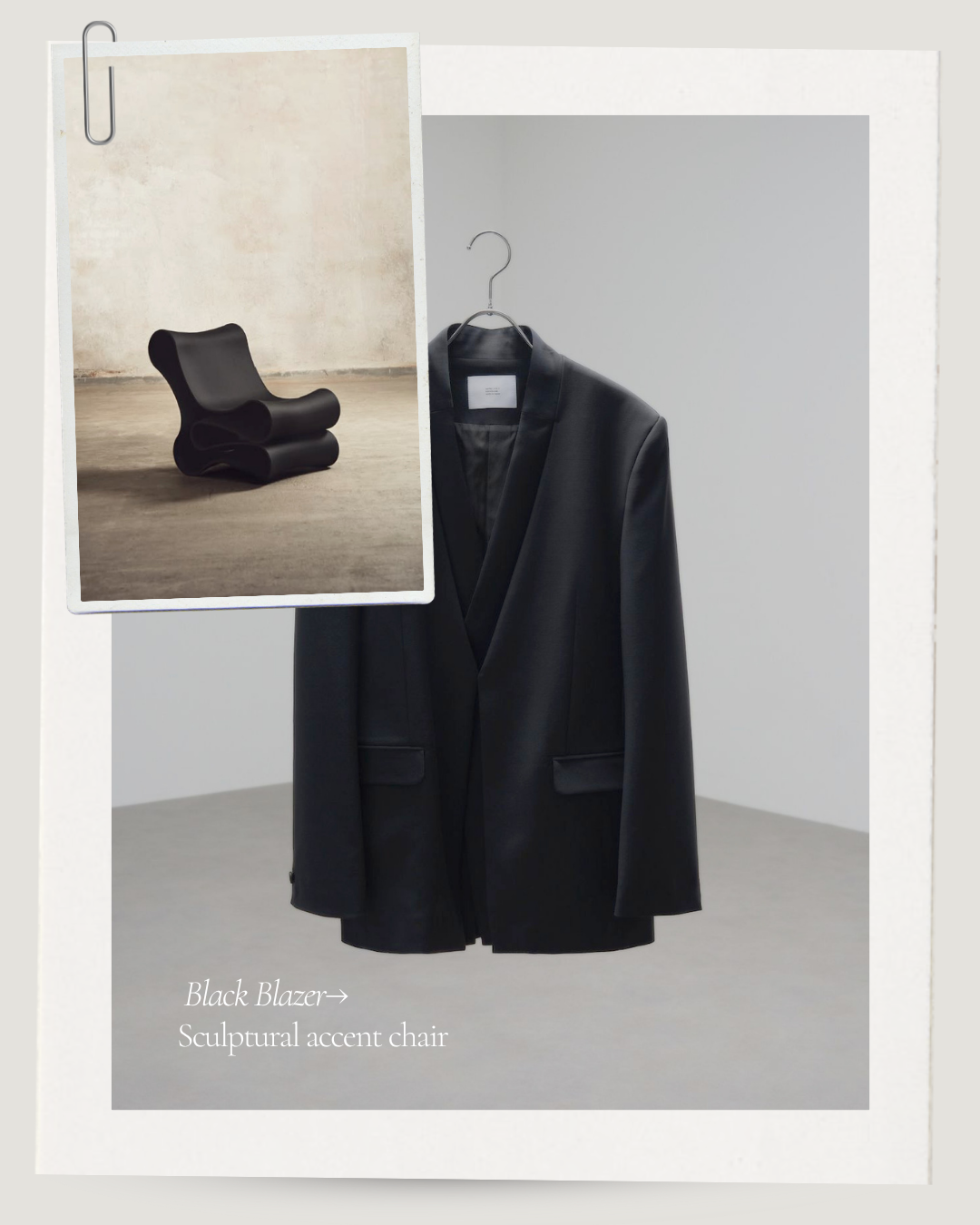
Black Blazer > Home Equivalent: Sculptural Accent Chair
A black blazer adds structure and so too does a sculptural accent chair. It could easily be the one item in a living room, bedroom or transitional space that brings many of the other style pieces together.
The key here is to look for a strong silhouette that feels slightly architectural. It doesn’t have to be big or overbearing, but something that has a bit of shape to it. Look for classic materials or fabric such as timber, leather, linen or boucle.
Think Wishbone Chair, Slipper Chair, Club Chair, Bergere Chair, Barcelona Chair, The Wassily Chair, Classic Sling Chair, and Grand Confort LC2 to name a few.
White T-Shirt > Home Equivalent: Wool Rug
Just like a simple white tee, a calm woolen rug with effortless texture is an item that will go with almost anything. You can go for a darker hue to ground the space, or a lighter colour that blends in - either way, woolen rugs are extremely durable and have the power to make everything else work.
Knit Sweater > Home Equivalent: Cashmere or Linen Throw
There’s a reason why knits never go out of style. They bring functional warmth, adaptable elegance and unparalleled versatility to any wardrobe - which is why my equivalent in the home is a natural fibre throw blanket. To keep this relevant throughout any season, opt for a colour that’s slightly muted and in block-out. Or, select one from my list of timeless patterns below that are known style staples.
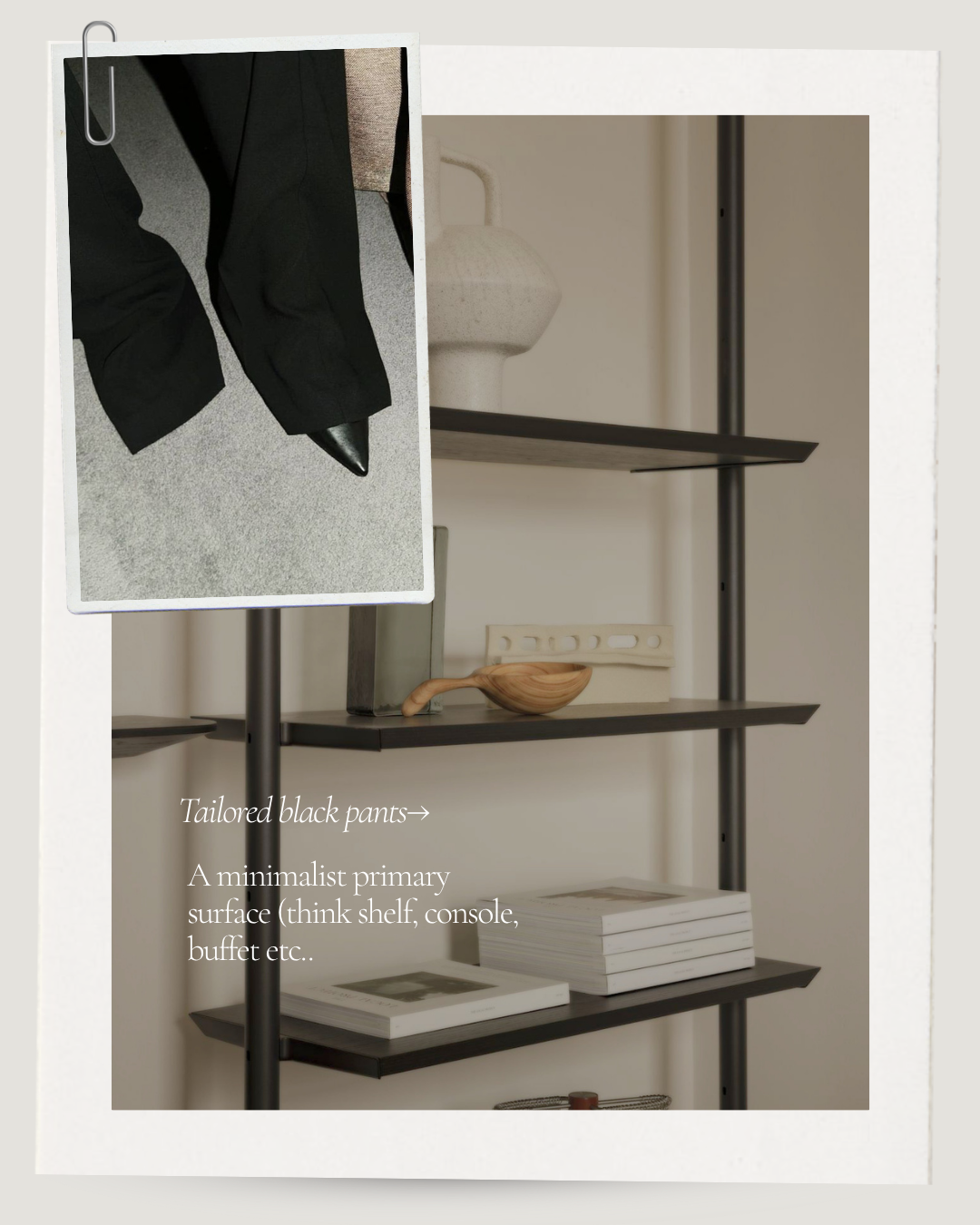
Black Tailored Pants > Home Equivalent: Primary Surface
This is the sophisticated, organisational backbone of the home. Just as tailored pants bring structure and polish to a wardrobe, a primary surface brings order and intention to a room.
It provides a foundation for the objects we use and love, while calmly creating an organised visual system in the background.
Whether it appears as a console, sideboard, buffet, shelf or mantel, it is often the piece that connects function and beauty. To ensure this is a capsule item, go for clean lines and enduring materials such as timber, stone or metal.
Keep this purchase neutral and minimalistic - remember, you can dress it up with your decor and styling.
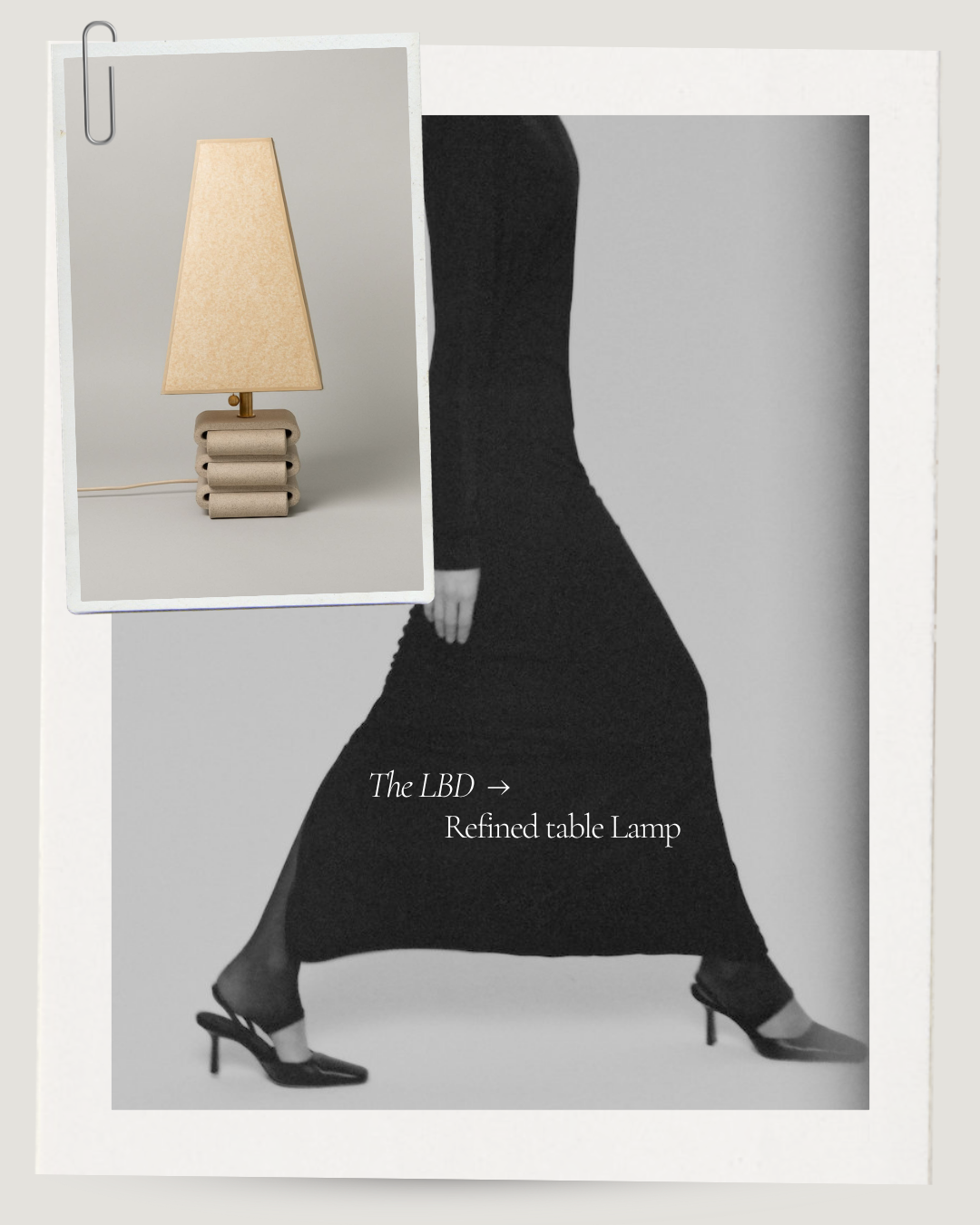
Little Black Dress > Home Equivalent: Table Lamp
Just as the little black dress comes in countless interpretations - fitted or flowing, sleeveless or long-sleeved, minimalist or detailed - the table lamp exists in many forms too.
What makes them both enduring is not a particular shape or trend, but a commitment to simplicity. Clean lines, balanced proportions and the ability to sit effortlessly within changing surroundings is what allows them to transcend fashion and remain relevant year after year.
The little black dress feels equally at home at a casual lunch, a formal dinner or a black-tie event, taking on the character of its surroundings while retaining an effortless sense of elegance.
The table lamp occupies a similar place within the home. Available in countless forms, materials and proportions, its enduring appeal lies in its versatility. It can soften a room, add character, create atmosphere and elevate a space without overwhelming it.
Like the little black dress, it reflects a level of calm confidence - simple enough to work almost anywhere, yet powerful enough to transform the way a room feels.
For the Capsule Home, I’d be placing lamps in every room and infusing a mix of iconic styles such as The Pleated Lamp Shape, Pharmacy Lamp, Globe Lamp, Articulating Task Lamp, Mushroom Lamp, Column Lamp, Totem Lamp or The Gourd Lamp to name a few.
Stone, ceramic, concrete, brass, linen, glass or chrome are all materials that tend to stay relevant when curated well.
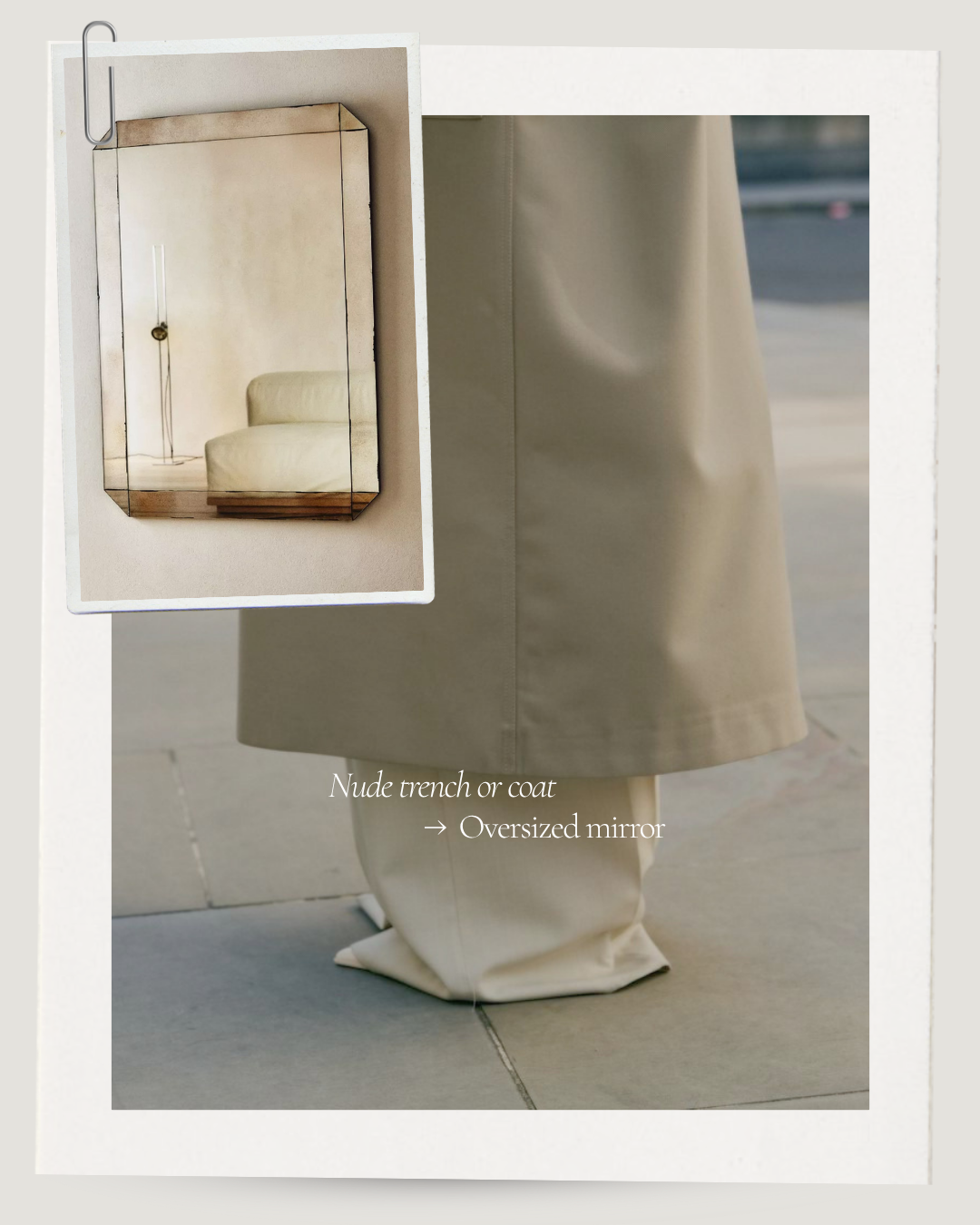
Trench Coat > Home Equivalent: Oversized Mirror or Art Piece
Just as a wardrobe needs the odd oversized piece, so too does a home.
For example, like a timeless trench coat, an oversized mirror instantly elevates everything around it, bringing a sense of polish to a space. Art does the same - providing a focal point and giving a sense of personality to a room.
The reason we go oversized is not because it’s trendy (although going big always makes a statement) - it’s because scale creates confidence.
In fashion, oversized often feels effortless and sophisticated rather than too tight or fussy. One big oversized garment can anchor the outfit and the same rule often applies in interiors.
A large mirror or art piece gives a room direction, authority and intentionality. It expands space and creates a sense of deliberate impact.
If I was approaching an oversized mirror like a capsule wardrobe I would be looking for a thin metal frame in black, gold, silver or bronze depending on your scheme, in an iconic, minimalist shape such as a circle mirror, pill mirror, panel mirror, rectangle or square - that’s carefully placed to fit just right.
For an oversized art piece, I’d lean into genres that feel classic and fit in almost any interior and feel like something you can live with for a long time. This could be an abstract expression piece, a landscape study, figure art, still life, monochromatic photography or textual minimalism.
Remember, the frame is just as important as the art.
Leather Loafers > Home Equivalent: Natural Side Table
Like a pair of leather loafers, a stone, concrete, timber or iron side table is understated, versatile and extremely dependable. It may not be the focal point of a room, but it provides function, balance and refinement, supporting everything around it.
You could say it “finishes” the look.
Look for simple silhouettes and honest materials. The most timeless styles favour clean lines, sculptural forms and natural finishes over decorative details or trend-driven shapes.
Some styles that come to mind - a simple pedestal table, stone plinth, timber stool, drum table or martini table. What makes these styles endure is that they’re built on proportion and materiality rather than decoration.
Much like a great leather loafer, they’re never the loudest piece in the room, but they certainly enhance the end result.
Capsule Home Accessories
If furniture and key homewares form the foundation of a Capsule Home, accessories are what bring it to life.
They play a role similar to that of jewellery, scarves, handbags and sunglasses within a wardrobe - not essential for function, but essential for character.
The difference between a house that feels complete and one that feels considered is often found in these finishing layers. In a Capsule Home, accessories are chosen because they feel dependable and versatile.
A ceramic vessel, a marble bowl, a stack of well-loved books, a collection of linen feather filled cushions, a sculptural object, a tray, a candle or a piece of framed art all serve the same purpose as a favourite watch or gold earring - they add personality and elegance while building on the foundation.
The most successful accessories are those that can move effortlessly between rooms and evolve alongside the home over time.
Much like a quality leather handbag that works with countless outfits, a beautiful timber bowl or handmade vessel can sit comfortably on a dining table, kitchen bench, console or bedside.
The goal is not abundance, but thoughtful curation. A Capsule Home relies on fewer, better pieces — objects chosen for their craftsmanship, materiality and ability to create a sense of warmth, meaning and permanence.
Just as a capsule wardrobe relies on a handful of timeless accessories to add personality and polish, a Capsule Home benefits from a considered collection of decorative layers.
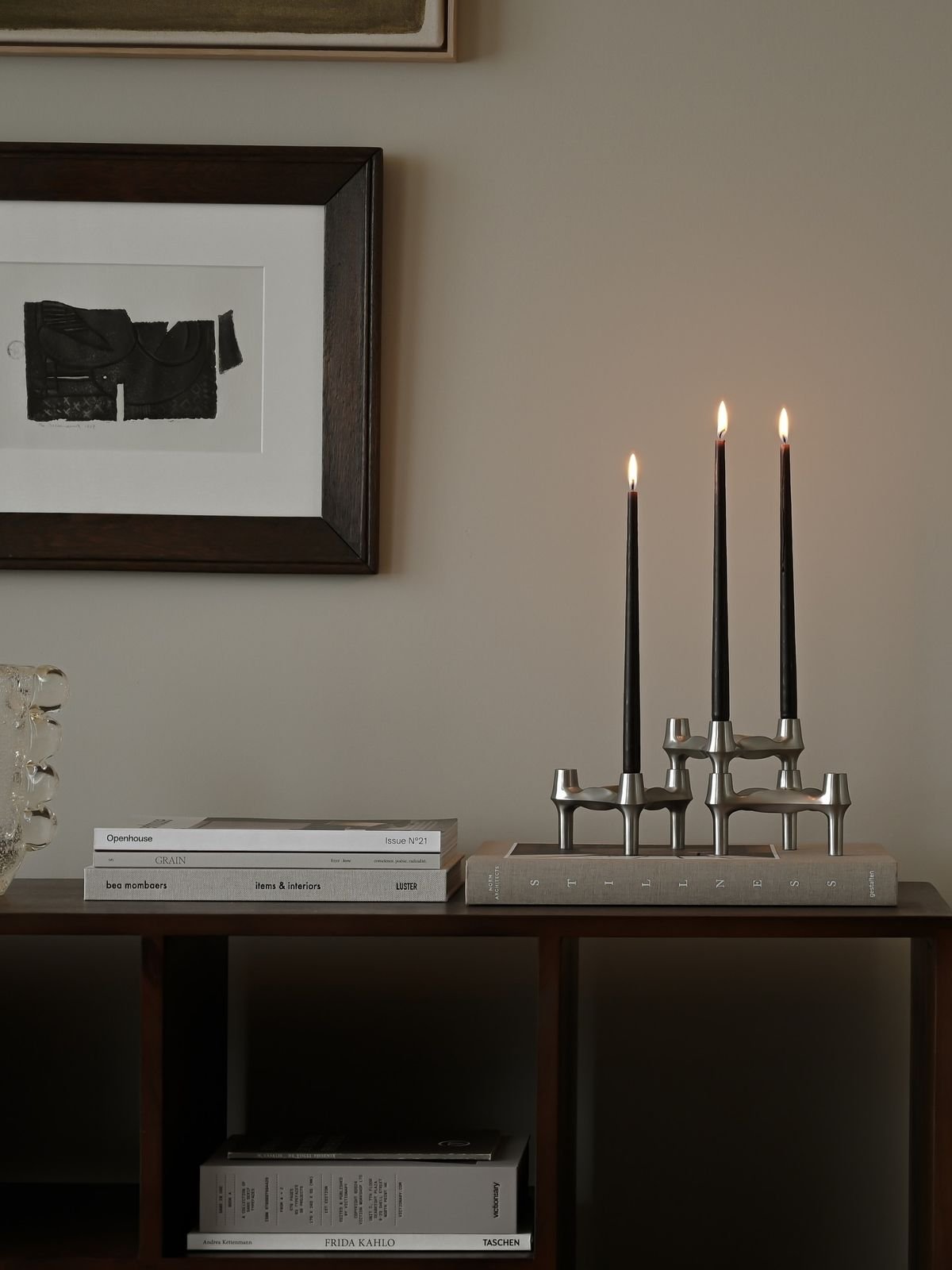
Image Source > pinterest > hei-kju: Wohntrends, Einrichtungsideen & Dekotipps
Here are some pieces that bring warmth, character and individuality to a space without relying on trends.
Gold hoop earrings → A sculptural ceramic vessel
A signature necklace → A piece of art - framed on its own or in a gallery set
A quality leather handbag → A handcrafted timber or stone bowl
A statement ring → A decorative object or sculpture
A classic watch → A beautiful tray in marble, metal or timber
A pair of sunglasses → A decorative coffee table book/s
A treasured heirloom piece of jewellery → A meaningful object collected through travel or passed down through family
A beautiful perfume → Candles and candle holders made from stone, steel or timber
A belt → A neutral decorative box or catchall tray
A Capsule Home’s Pattern and Texture Playbook
Like every great wardrobe, a Capsule Home benefits from a thoughtful mix of patterns and textures that add depth without compromising longevity.
Stripes remain the undisputed classic, joined by favourites such as checks, plaids, subtle tartans, herringbone, gingham and pinstripes.
Botanical motifs, traditional florals and simple geometric patterns continue to prove their staying power, while animal prints such as leopard and zebra can be introduced sparingly as a personality layer rather than a defining feature.
The key is not to chase novelty, but to embrace patterns that have remained relevant across generations.
Texture is equally important. Linen, wool, leather, velvet, bouclé, waffle cotton, cane, rattan, jute, natural stone, concrete, micro-cement and timber grain bring richness to a space in much the same way that denim, cashmere and silk elevate a wardrobe.
These materials endure because they are rooted in craftsmanship, nature and tactile appeal rather than trends.
Together, they create a home that feels layered, inviting and timeless - not because it belongs to a particular moment, but because it transcends one.
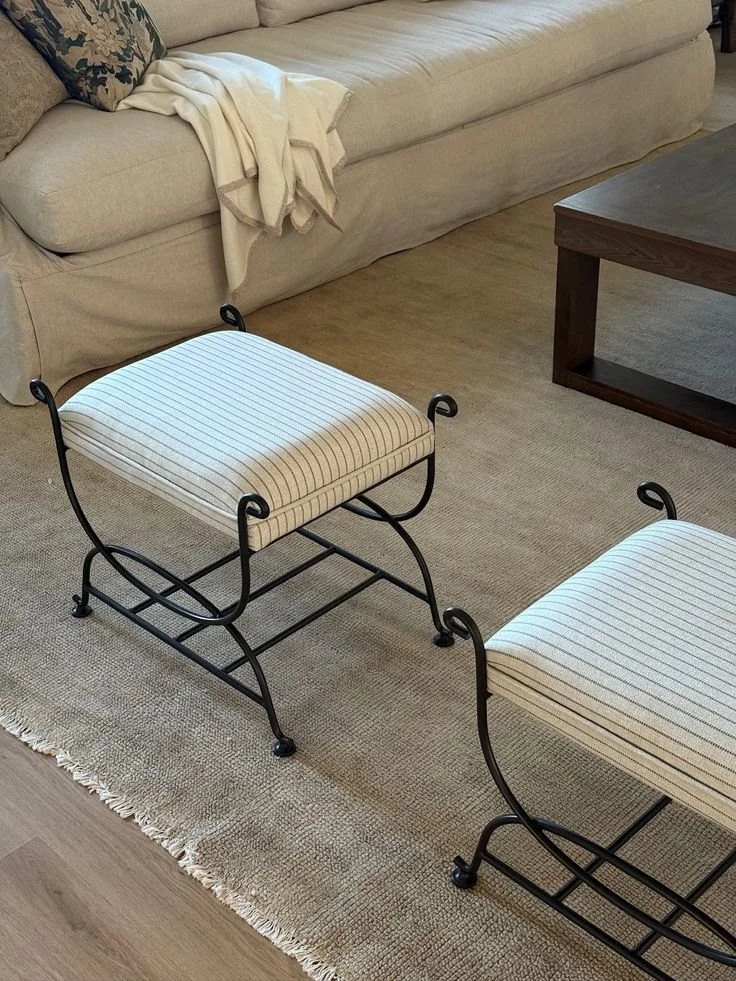
Image Source > Pinterest > According To Mandy
Closing off the Capsule Home
At their core, both the capsule wardrobe and the Capsule Home are exercises in intentional living - collections built not for a season, but for a reason.
Where beauty and style does not have to be transient and transactional, but instead, pursued with a level of long range forecast.
Perhaps the greatest lesson of the Capsule Home is that good design has never been about having more. It has always been about knowing what is enough.
In a culture that constantly encourages us to upgrade, replace and reinvent, there is something intensely radical, yet insanely liberating about creating a home built on permanence rather than novelty.
Because ultimately, a Capsule Home is not a design style, it’s a lifestyle. It is a philosophy that asks us to simply choose better and live more deliberately.
The reward is of course a beautiful space to live in but that is a given.
The real value is creating a home that feels calm rather than cluttered, meaningful rather than momentary, and reflective of the people who live in it. And long after trends have come and gone, those qualities never go out of style.
Continue the Conversation
Join Marx Mode, our weekly editorial exploring interiors, beauty, design philosophy and the art of living well.
Because the most meaningful homes are rarely created through more.
They are created through consideration.