your light & wellbeing routine essentials guide
When it comes to interiors - designers and stylists speak endlessly about lighting, and for good reason.
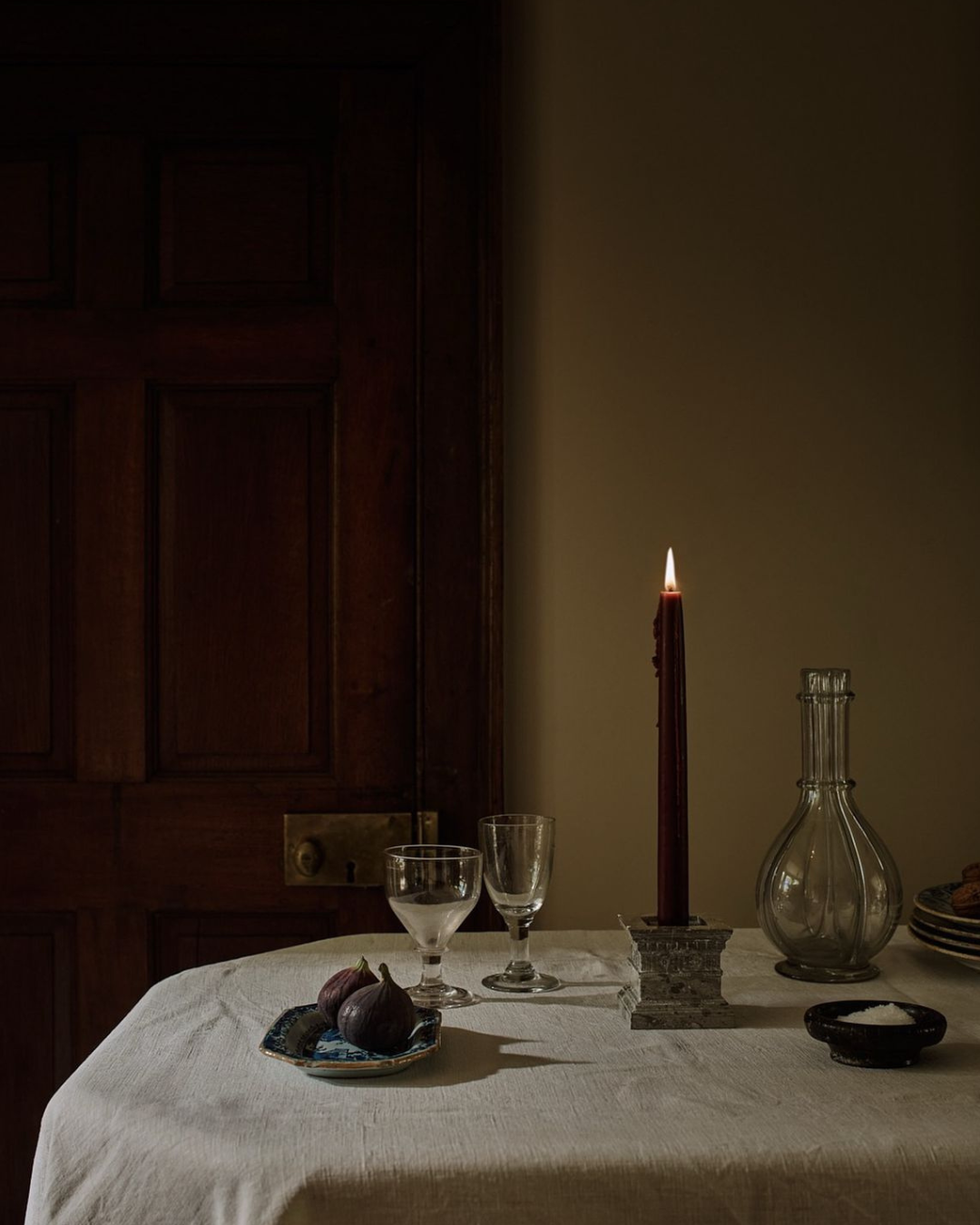
Image Source | Jamb London | Pinterest
Thoughtfully layered lighting creates atmosphere, enhances mood, enables functionality and fosters ambience. It allows us to compose a space that feels considered, intentional, elevated and responsive to our needs.
But lately, I’ve felt called to unpack this more deeply - beyond what we can see and more into what we can feel. What are the true impacts of light on human health and wellbeing?
I’m obsessed with lighting and am fascinated by the long-standing, primal relationship we have with it. Because light and wellbeing are intricately linked. How we choose to live with light shapes the way we feel, think and function every single day.
I was recently listening to a podcast with Dr Andrew Huberman and Rick Rubin where they touched on this very topic, referring to artificial light as junk food. In essence, the more poor lighting you consume, the more health issues you could run into over time.
A beautiful home is not just something to admire visually, a beautiful home is also an experience felt nervously, emotionally and physiologically. Our environments are constantly giving us feedback which prime us for feeling better or worse.
I would like to preface this by saying, I am not a scientist, nor a guru on the science of light. I’m writing this out of pure interest to better understand and support my own nervous system and to create a more sustainable, nourishing relationship with light. I think that with so many things out of our control, it’s kind of cool that we can curate light to enhance our way of living.
The Natural Relationship Between Humans and Light Runs Deep
I never cared much about light in my early years…it was kind of just there and part of everyday life.
What was there to think about?
But a few years back I eventually started to take note and realise that light had a powerful role to play. I’ve never been a good sleeper. In fact, I’ve struggled with insomnia since childhood. After learning that insomnia can be nourished in part through an awareness around natural light, I started to become more curious.
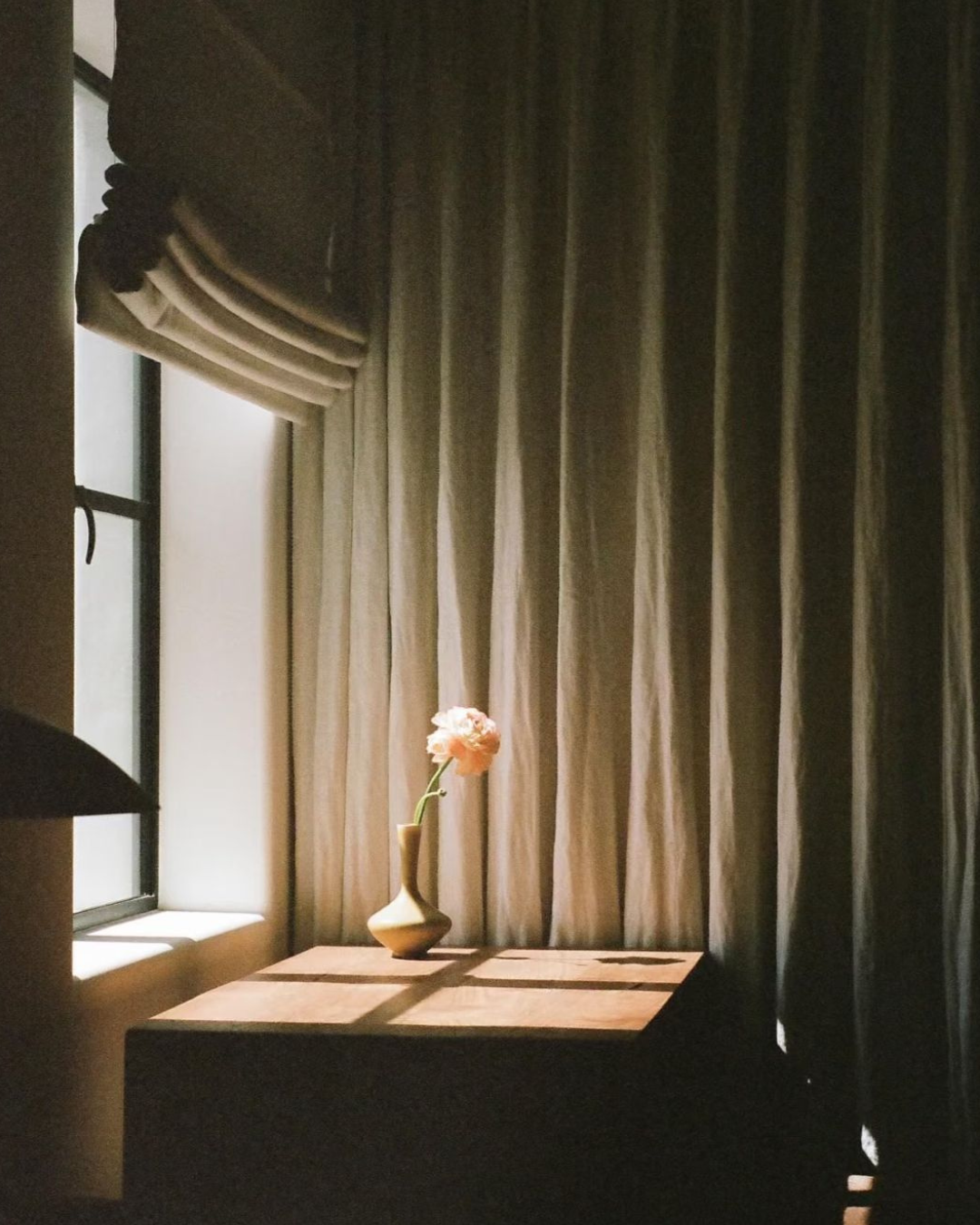
Image | PLUMÉO Créations | Pinterest
Human beings are not separate from light, we are regulated by it. For thousands of years, our bodies have evolved in rhythm with the sun.
Natural light signals when to wake, when to feel alert, when to soften and when to rest. It influences our circadian rhythm, hormone production, mood and energy. So many of our major biological systems are governed by natural light.
When we disrupt this relationship through artificial lighting, screens, and inconsistent exposure, we can create a subtle but constant friction within the body which I believe compounds over time. It certainly has for me, and now I’m at a point where I want to rehabilitate any dysfunction that has been caused through problematic lighting.
Light and the Nervous System: A Powerful Influence
The nervous system is constantly scanning your environment for cues of safety or stress and I find it so interesting that light seems to be one of its most immediate inputs.
What’s more fascinating, is that half the time we’re receiving these intense signals which are continuously putting us in a heightened state, and we’re not even aware of why or how it’s happening.
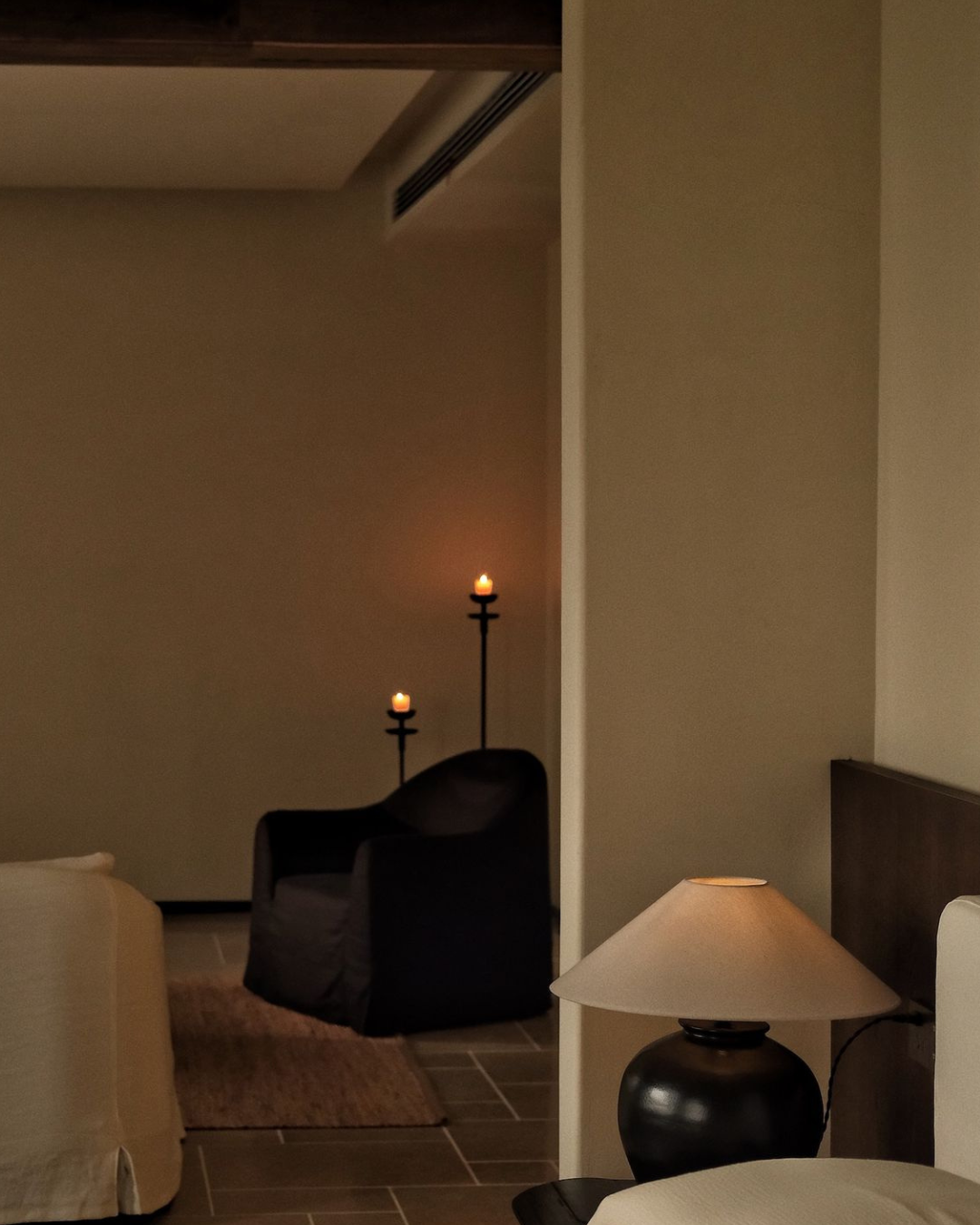
Image Source | Leibel | Pinterest
Harsh, bright, cool-toned lighting (often high in blue light) can:
Increase alertness at the wrong times
Elevate cortisol (stress hormone)
Create a sense of overstimulation
Whereas softer, warmer, lower-intensity light:
Signals safety and calm
Encourages the body to downregulate
Supports rest, digestion and restoration
This is where light and wellbeing become inseparable. A well-designed home doesn’t just illuminate, it regulates.
Red Light vs Blue Light: What Your Body is Responding To?
At a scientific level, the difference between red light and blue light comes down to wavelength, energy and how deeply that light interacts with the body.
Light exists on a spectrum, measured in nanometres (nm).
Blue light: ~400–495 nm
Red light: ~620–750 nm
Shorter wavelength = higher energy
Longer wavelength = lower energy.
Energy & Biological Impact
Blue Light is high energy and short wavelength.
Because blue light carries more energy, it interacts strongly with your eyes and brain.
It:
Stimulates specialised retinal cells
Signals directly to the brain’s circadian clock
Suppresses melatonin production
Increases alertness, focus and reaction time
This is why blue light is biologically activating.
But the trade-off:
At night, this same stimulation can delay sleep onset
It can keep your nervous system in a subtly heightened state
Overexposure (especially from screens) may contribute to eye strain and fatigue
Many common artificial light sources such as LEDs, smartphone screens, computers, and fluorescent bulbs emit significant amounts of blue light, which is the high-energy, short-wavelength component of the visible spectrum. At the wrong times of the day this can cause overload on the body.
Red Light (Low Energy, Long Wavelength)
Red light behaves very differently…
Because of its longer wavelength:
It penetrates deeper into tissue (including skin and muscle)
It does not significantly stimulate the circadian alertness pathway
It has minimal effect on melatonin suppression
Instead, red light is associated with:
Cellular support (via mitochondrial activity—often discussed in photobiomodulation)
Reduced inflammation (in some contexts)
Has a calming effect on the nervous system
This is why red light is considered biologically restorative rather than stimulating.
Why This Matters in Daily Life?
Your body doesn’t interpret light as “nice” or “harsh” - it interprets it as instructions.
Blue light tells your body: wake up, be alert and stay switched on.
Red light tells your body: slow down, calm down and prepare to rest.
When your environment is mismatched with these signals (e.g. blue light at night), your biology has to work harder to compensate.
A Light Routine to Support Your Body
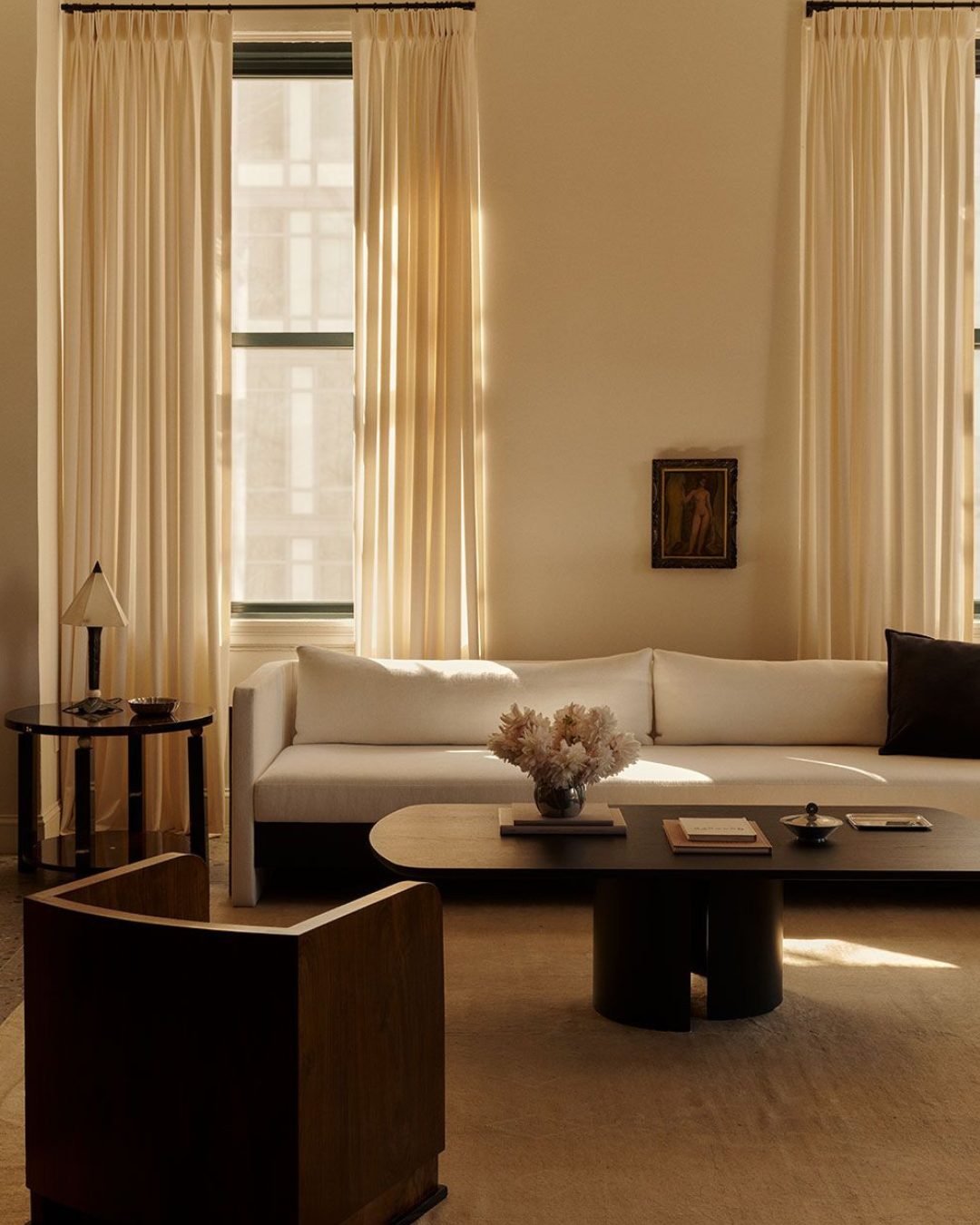
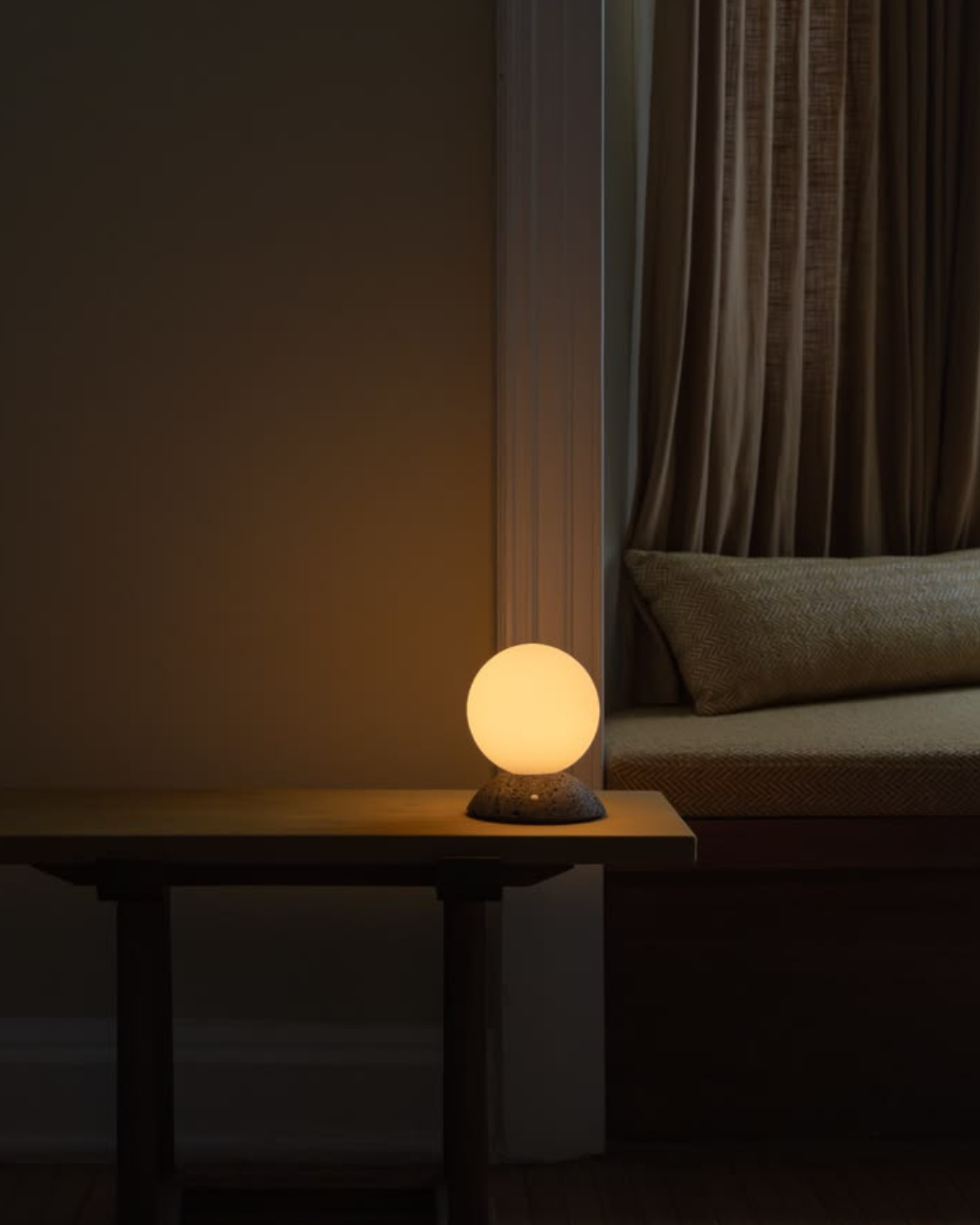
Image Source | Doris Leslie Blau| Pinterest | A quiet afternoon glow
I’m still in the early phases of trying to create a sustainable light routine. The main challenge I’m having so far is to spend enough time outside when most of my work is based inside.
But in the end, when it comes to change it’s not about what you don't do, it’s about what you do do, that matters - so slow foundational steps are what I find most achievable.
The below are daily rhythm ideas that align the environment with physiology to maximise wellness through light.
Morning: Activate & Align
Seek natural light early in the morning
Open windows, step outside, or sit near sunlight
I try to go for a short walk around the block on the mornings I can with the kids before school. The goal is to have natural sunlight on my face and body as early as possible. Even if it’s just for 5-10 minutes.
Daytime: Sustain Light
Maximise natural light exposure
Avoid overly dim environments
Keep artificial lighting neutral and balanced
Evening: Downregulate
Dim or switch off overhead lighting
Switch to warm-toned lamps
Reduce screen exposure or use filters
Night: Restore & Sleep
Use low, red-toned lighting where possible
Avoid bright bathroom or hallway lights
Essentially keep the house as dark as possible
We all have some sort of relationship with light so the idea here is not about getting things perfect, but perhaps refining your own light ritual to feel calmer and more responsive to you and your needs.
Refined Red Light Options for Your Home
Incorporating red light doesn’t require a complete overhaul—it’s about thoughtful edits.
Bulbs
Warm or amber LED bulbs (look for lower Kelvin ratings: ~1800–2700K)
Salt lamps or soft-glow filament bulbs
Lamps & Placement
Table lamps instead of overhead lighting
Layered lighting at varying heights to soften the room
Glasses
Blue light blocking glasses for evening use. I use these personally and find them to be very calming and helpful to filter out residual blue light.
Particularly useful if screens are unavoidable
Screens
Night mode settings on phones and devices
Apps that shift screen temperature after sunset
Small Rituals
A single lamp switched on instead of full lighting
Even just lighting a candle or two can completely change the mood and atmosphere of a room.
These are not just styling choices, they are sensory decisions.
Why Natural Light in a Home is Essential
It seems like a no-brainer, but we can optimise our wellbeing through natural light just by being more aware of it and learning how it naturally shows up in our home and everyday life.
Natural light is not just a design feature. It is a biological necessity.
It:
Regulates your sleep-wake cycle
Supports hormone production
Enhances focus, clarity and emotional stability
Creates a sense of openness and spatial ease
A home that honours natural light feels open and free, even when it’s small. And that’s such a great feeling to have at home.
Aside from using blue-blocking glasses, changing light bulbs and creating dim, low-lit spaces in the evening, you can also nourish more natural light during the days you’re at home by:
Layering sheer fabrics to diffuse rather than block window treatments
Position mirrors to gently reflect daylight
Edit furniture placement to allow light to travel
Natural light is something to design with.
A Philosophy of Living Well
When we speak about interiors, we often focus on what can be seen. But the most powerful spaces are felt.
To consider light and wellbeing is to move beyond aesthetics into something more personal and responsive - a way of living that is attuned, intentional and makes a positive impact.
This may seem small, but in the world we live in, our senses are under constant attack. Curating our homes more mindfully can help restore this balance and create a much needed space of repair and renew from our daily busy lives.
It is the difference between a home that looks refined and a home that refines you in return.
For more ideas and conversations around consciously editing your home, join the Marx Mode Community. MODE is where we share our liveable editorial philosophy on interior culture and modern living. Get curated discoveries, considered perspectives and collected inspiration straight to your inbox - simply subscribe below.