There is a phrase I hear often…“We’re waiting until the kids are older.”
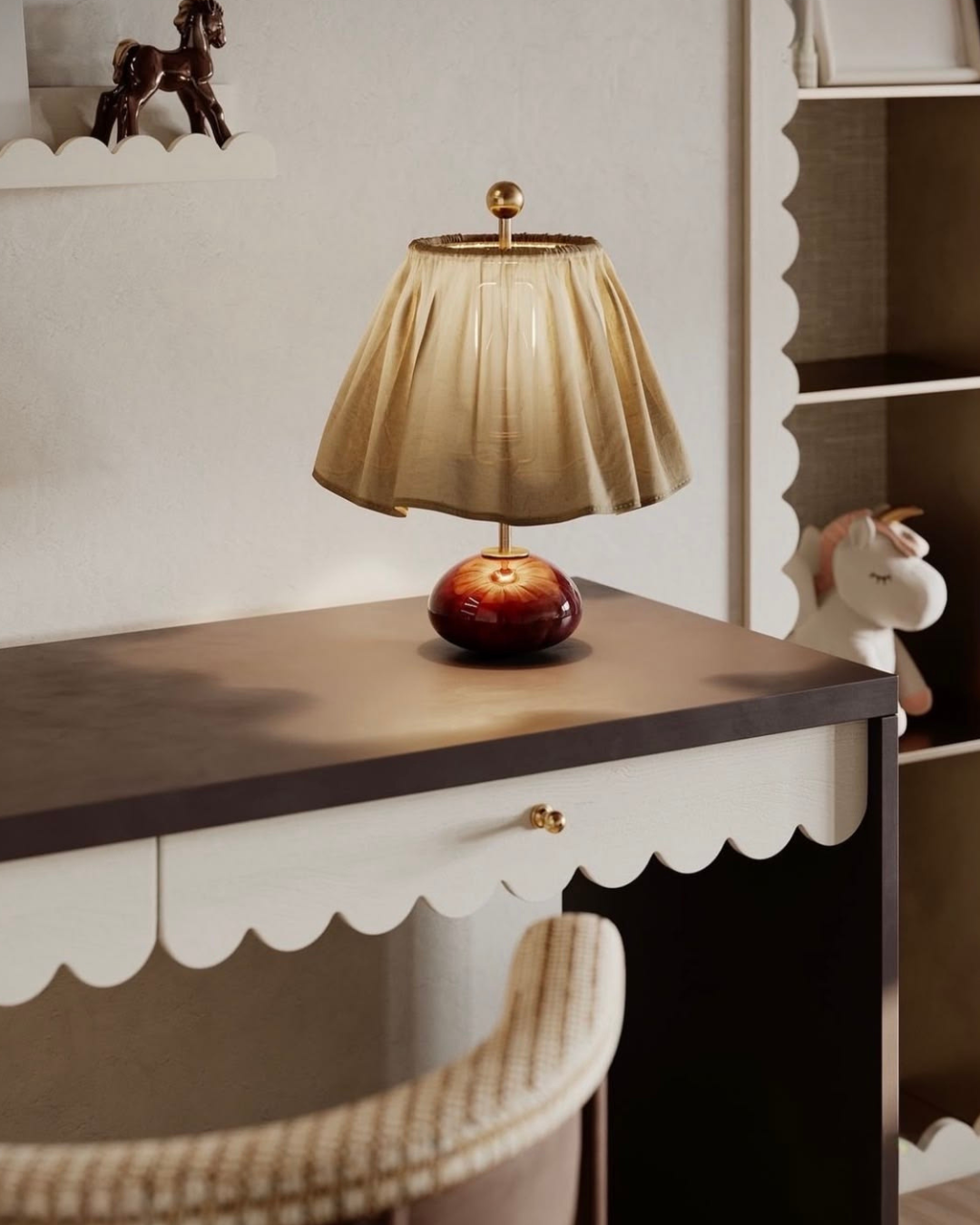
Image Source: Pinterest - The Eclectica
Waiting to invest in furniture they truly love, to decorate properly, to create a beautiful home with kids because the assumption is that children and curated living cannot coexist.
The logic is completely sensible. Children are messy. So messy. They spill things, knock things over, leave fingerprints e-v-e-r-y-w-h-e-r-e and possess a remarkable ability to test the durability of almost every surface they encounter.
But over the years, I’ve come to believe that both a beautiful home, and a beautiful family life can live quite beautifully together.
Yes, technically in the grand scheme of things our children may only be at home with us for a short period of time. But during those years, we shouldn’t have to postpone beauty (if we don’t want to). In fact, these could be the years when we need it most.
When our children were born, I struggled with the idea that every ceramic object, every piece of low-hanging art and every lighter coloured fabric should suddenly disappear in favour of plastic, practicality and precaution.
The thought felt surprisingly heartbreaking.
Not because I care about things more than people, but because I genuinely believe that beauty is a way to create a sense of home.
I wasn’t willing to accept that welcoming children into our lives meant abandoning that outlook completely. I also remember thinking, ‘This is a time in my life where I’m just coming into my own - my own style and expression. Should I really just press pause while I wait for our babies to grow up?’
Instead, we experimented with another possibility. What if children and beautiful spaces could grow together?
The outcome has been more interesting than I ever expected.
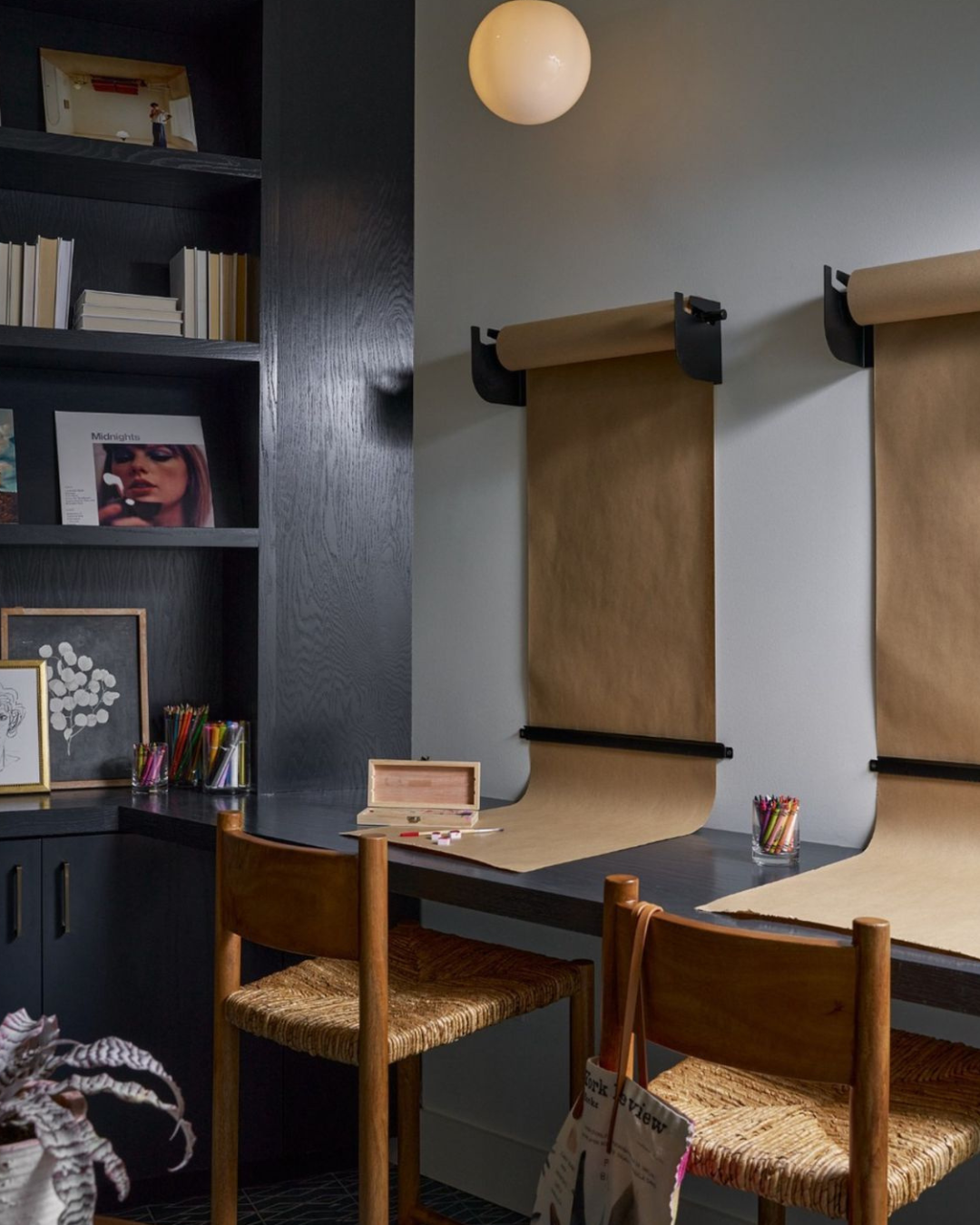
Not only have our children learned how to care for the things around them, but they have developed an appreciation for beauty that continues to surprise me.
And it all started with a few simple shifts.
1.Teaching care, not caution
I must first make mention that of course having children means making adjustments. Often they don’t fit in with you, you fit in with them.
When my first child started crawling I did put a few things up higher to begin with, but only as a way to start teaching her a philosophy around learning and cultivating a relationship with her surroundings.
For example, some things are for playing with. Others are not. And that’s ok. Because there are so many ways we can experience the world.
Here, you’re teaching kids how to care for things, not be scared of them.
One of the greatest misconceptions about raising children around beautiful things is that they can’t learn how to interact with them appropriately. Of course, young children explore the world through touch, and that curiosity should be encouraged, not suppressed. But part of parenting is helping them understand that different objects invite different behaviours.
Some things are for playing with, some are for creating with, and some things are simply for appreciating.
It takes consistency in the beginning, but over time they learn that caring for things is simply part of life. Far from restricting them, it expands their understanding of the world and helps them develop respect for the spaces and objects they share with others.
And when they get a bit older, you can add in a little humour too.
For example, a few months ago my kids were running around the coffee table which has a simple oversized ceramic bowl on it - I joked, “The person who breaks that bowl won’t live to see another year” - they thought it was hilarious (they knew I was clearly joking) and now they make fun of the bowl and laugh about not being the one to break it.
2.Create zones that support both creativity and calm
One of the most effective things we did was create clear zones throughout the house that feel less restricted than others.
Areas where creativity can flourish without hesitation. Places dedicated to drawing, glue, playdough, craft projects - god-forbid, even slime…
I am huge on creativity so space to create is really important.
But I think kids also benefit from understanding that different spaces serve different purposes.
A dining table can host family meals, conversations, even homework or a lego project. A reading corner can invite quiet reflection. A craft table can host paint, glitter and cardboard constructions.
The distinction matters because it teaches children that homes are composed intentionally. That different environments support different behaviours. This is so true of how homes are imagined and built - a kitchen is usually for storing food, prep and cooking, a bathroom is for showering, getting ready and self care etc…
Homes are naturally zoned into functional areas based on what we use them for. Kids can feel empowered and comfortable knowing there are places they can go to to express and decompress based on their needs and natural inclinations.
3.Storage is a timeless luxury
I used to say that storage is the ‘new’ luxury but now I think it should be a standard staple. Storage changes the way a home is used.
Not because storage looks impressive, but because it creates possibility.
Beautiful spaces rarely feel calm because they contain fewer possessions. They feel calm because everything that’s important, has somewhere to go.
When children are young, storage helps contain the daily rhythm of family life.
As they grow older, it becomes something even more valuable - it teaches ownership.
Children learn where things belong and that tidying up isn’t punishment but participation. They become contributors to the atmosphere of the home rather than passive occupants within it.
Good storage not only makes this easier for everyone, but it also creates a sense of order without requiring perfection.
Baskets, drawers, cupboards, toy cabinets and concealed storage may not be the most glamorous purchases, but they are often the difference between a house that feels overwhelmed and one that feels composed.
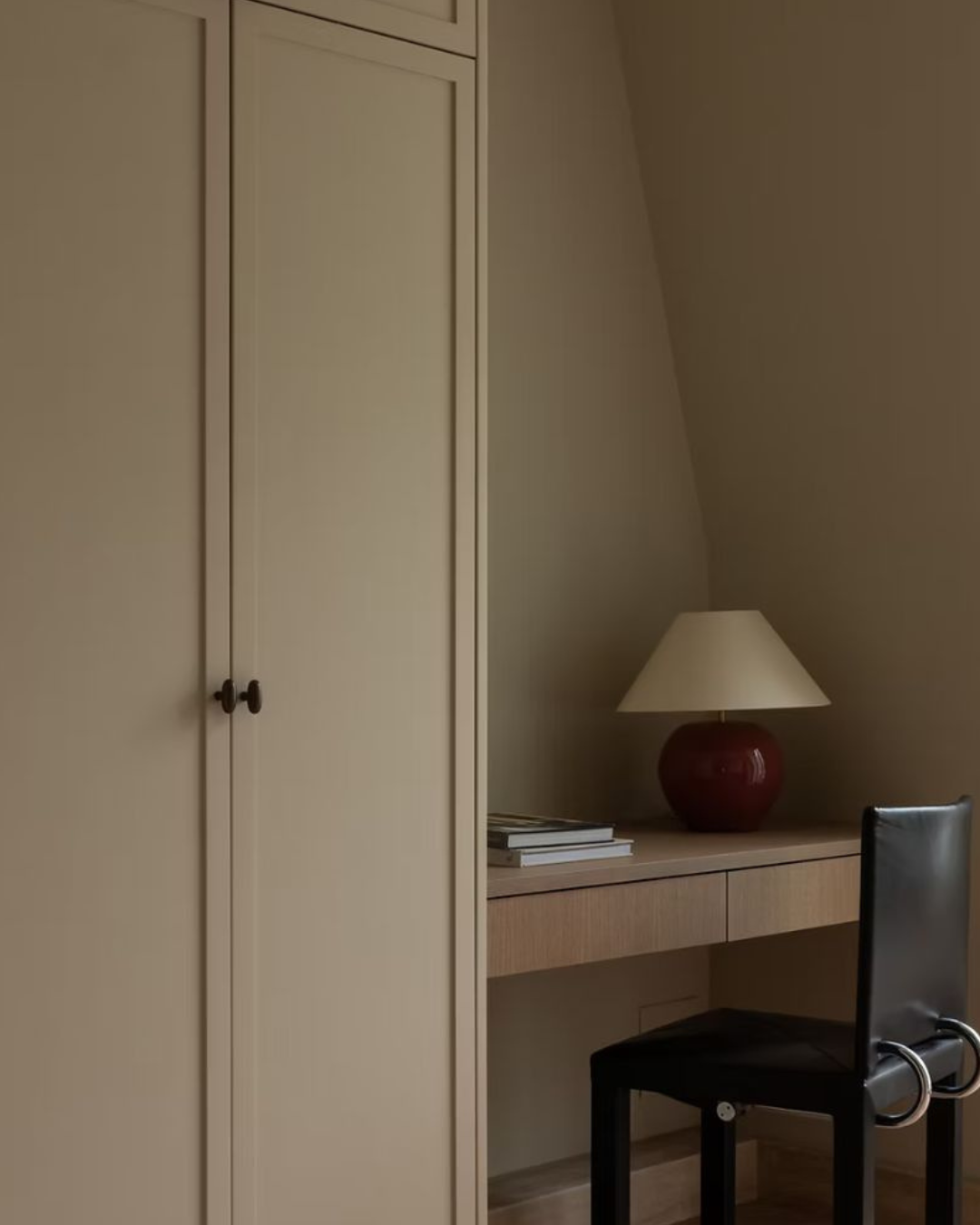
Image Source > pinterest > Casson Hardware
4.Choose enduring materials
Creating a family-friendly home doesn’t have to be fragile-proof.
In reality, many beautiful materials become more interesting as they age and those are the best ones in my opinion to go for.
Our home includes concrete, stone, tile and natural materials that can withstand the realities of everyday life - they’re etched, chipped, marked and scratched - not through being purposely wreaked, but through the act of everyday modern living.
I don’t see this as an imperfection, I see these pieces as items that hold stories, memories and character.
My advice would be to consider materials that welcome living such as natural stone that develops patina, timber that ages well with acquired marks, linen that relaxes and grows stronger over time and leather that looks better the older it gets.
I hear people say that they’d much prefer to purchase cheaper items when the kids are younger and invest in more quality pieces once they’re older or even out of the home. Again, I completely understand the logic, but the opposite of that statement could also be true.
Buying items that are made from enduring quality materials, not only can look better, but could also out-live cheaper alternatives by decades.
Use washable fabrics, protective covers where needed, durable finishes and age-appropriate boundaries. Protecting items doesn’t mean being precious—it means helping them last.
5.People before possessions
For all of our conversations around caring for things, there is one principle that sits above everything else - people matter more than possessions.
My children are infinitely more important than any bowl, ceramic, artwork or piece of furniture that sits within our home.
If something breaks, it breaks. It can be repaired, replaced or simply become part of the story. Children cannot.
While we’ve taught our kids how to care for the things around them, we’ve been equally deliberate about ensuring they never feel that an object is more important than they are.
Accidents happen. Glasses get knocked over. Things get chipped. Life unfolds exactly as it should. When those moments occur, our focus isn’t on blame but on reassurance.
They already know the standard because they make a genuine effort to uphold it. The occasional mishap isn’t a failure of that lesson—it’s simply part of being human. A well-loved home should have room for both beautiful things and grace when things don’t go to plan.
While this is not a super practical tip, I think the ethos of this mindset has really gone a long way to balance aesthetics and cultivating a genuine care for the home and the people in it.
Beauty is not something for later
My thought remains that beauty does not have to be cast aside for ‘later’ if you don’t want it to.
Does it require effort? Absolutely.
In the beginning, creating systems required conscious thought and deliberate action. There were conversations, reminders and moments of reinforcement.
But eventually it all just clicks.
The kids embrace it and it’s just become a normal way of life.
What started out as a way to raise kids in a deliberate setting has become a lot more than that. They help maintain the culture we set out to create and I’m really happy that we’ve been able to help them learn about standards, beauty, care and so many more great values.
A beautiful home with kids isn’t about protecting expensive things, it’s about creating an environment where beauty is respected rather than postponed.
Children learn that the objects around them matter because they contribute to how a space feels - be it a piece of hand-drawn art they’ve created, a coordinated colour scheme or a sculpted vase that adds subtle depth and interest.
The things we choose to surround ourselves with should matter. Our choices carry weight and have power. And in knowing and being part of this, it’s my hope that our children will be able to one day create a world that feels just as connected and responsive to them too.
Many people believe they’ll create the home they truly want once the children are older but life has a habit of moving the finish line.
There will always be another reason to wait.
Another season. Another stage. Another excuse.
Beauty was never meant to be reserved for some future version of life.
It belongs in the middle of it.
Especially now.
And who says kids don’t enjoy and appreciate an environment filled with beauty and intention - whatever that may look like in your home.
Join Mode
For more ideas and conversations around consciously editing your home, join the Mode Community. MODE is where we share our liveable editorial philosophy on interior culture and modern living. Get curated discoveries, considered perspectives and collected inspiration straight to your inbox - simply subscribe below.