Tile Talks
Your Complete Design Guide to Picking Tiles.
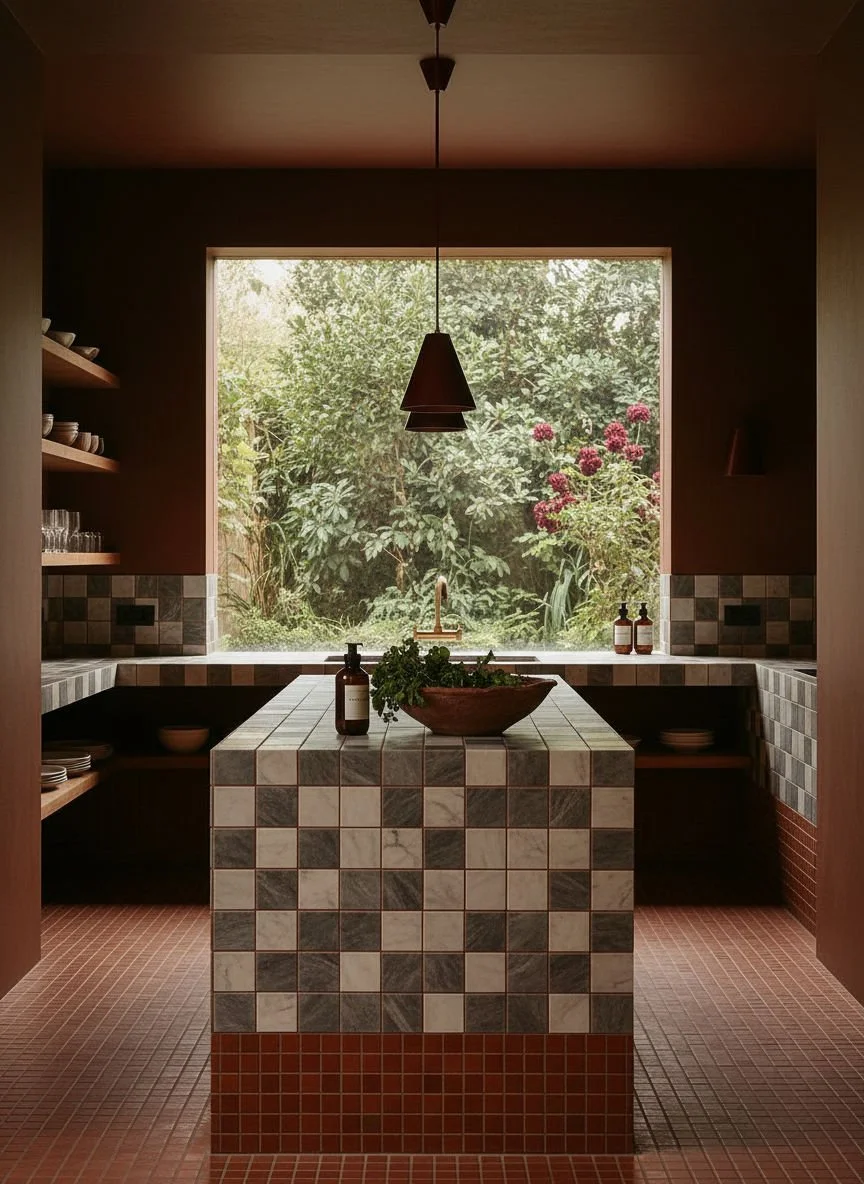
Image source: Starts With Design - Pinterest
Tiles have long been a way to express personality, style and of course - make a statement.
Used well, they punctuate a space with attitude, texture and intent. The key isn’t excess though, it’s precision.
I like to ask one key question when pulling together a tile scheme…
‘What moment do I want to create?’
Think of using a feature tile as a way to accentuate and elevate.
For example, a tiled splashback in a deep glaze, a sculptural wall in a powder room, a tiled hearth that grounds a living space, and an interesting benchtop or floor tile can penetrate the senses in an instant.
How to pick tiles?
The size, colour, pattern and positioning of your tile choice will create a very specific outcome..
Tile colour and finish quietly choreograph how a room feels — emotionally, visually, even physically. Here’s how they shape the atmosphere…
Light tiles
Soft whites, warm ivories and pale stones reflect light, opening a room and creating a sense of ease. Light tiles read clean, timeless, and expansive — never loud, always confident.
Dark tiles
Charcoal, deep green, inky blue or chocolate brown bring gravity and intimacy. They ground. Matte or honed finishes feel moody and refined; high-gloss dark tiles add drama and depth, especially under low, warm lighting.
Warm tone tiles
Terracotta, rust, sand and clay tones make spaces feel human and tactile. They soften hard lines and introduce warmth. Best paired with natural light and raw materials, warm tiles create a sense of comfort and ease.
Cool tone tiles
Greys, blue-greens and stone hues feel crisp and composed. They sharpen a space, enhancing a sense of order and restraint. Satin or polished finishes amplify their coolness, while textured surfaces keep them from feeling cold.
Matte tiles
Matte tiles absorb light, creating softness and calm. They feel contemporary, grounded and architectural — ideal for floors and immersive bathrooms where restraint is the luxury.
Gloss & glazed tiles
Glossy tiles bounce light, adding energy and movement. Irregular glazes introduce depth and imperfection, making spaces feel layered and lived-in. Best used intentionally, gloss acts as an accent rather than a backdrop.
Texture & variation
Handmade finishes, tonal variation and visible edges add soul. They break uniformity and make a room feel curated rather than constructed.
Size & pattern
Mixing scale is often more effective than mixing pattern. Large-format tiles ground a space, while smaller tiles add rhythm and detail. Use pattern sparingly and place it where the eye naturally lands — splashbacks, shower walls, or feature zones.
Importantly, your design needs to take scale into consideration. Size really matters. Oversized tiles feel architectural and calm. Smaller formats bring energy and really pack a punch.
Tiles can be used either alone or in combination with each other.
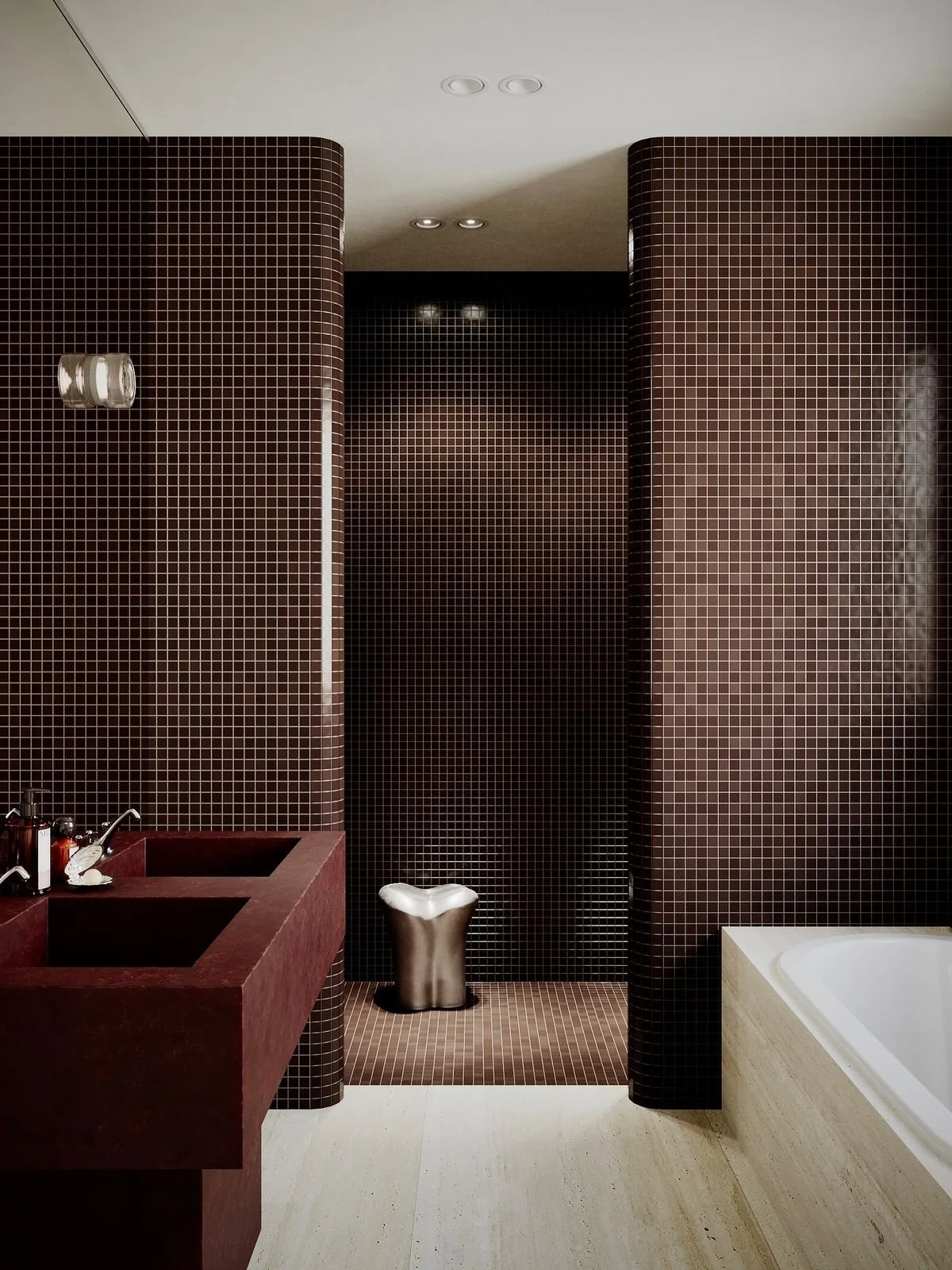
Striking tile visualisation by Victoria_3d.vis_Sevastopol - Pinterest
Using tiles alone
A single tile, used with conviction, can be incredibly powerful. One colour, one finish, one format — repeated. This creates a feeling of calm and cohesion. Here, you can let the interest come from scale, layout or texture rather than contrast. Simplicity, when done well, can result in a room that feels confident and timeless.
Combining tiles
When mixing tiles, think in roles. One tile leads, the other supports. Pair contrast through finish rather than colour — matte with gloss, smooth with textured. Or keep the finish consistent and play with tone - light and dark, warm and cool, subtle shifts that feel considered rather than chaotic.
Control the transition. A clean line, a change in plane, or a natural stopping point (a ledge, niche, or joinery line) keeps combinations sharp. Avoid competing patterns. If one tile has movement, the other should be quiet.
Grout is a choice
Grout isn’t neutral — it’s a design choice. Match it for softness and continuity, contrast it for graphic impact. The wrong grout can undo a great tile combination but the right one can easily elevate it.
Where to use tiles
Honestly, there are so many areas you could and can use tile. Just like the temperament of this article, I like to go for restraint and carefully consider tiled areas in relation to the other materials and finishes. Put simply, it’s better to create a tile schedule in tandem with your wider interiors selections.
When doing so, here are some tiled areas you could consider.
Floor tiles
A tiled floor sets the emotional temperature of a room. Large-format tiles create calm and continuity, making spaces feel expansive and architectural. You can really pull off a feeling of granularity with the right floor tile.
Bench top tiles
Tiles on a bench top feels tactile, crafted and rather luxurious. It softens hard joinery and introduces rhythm through grout lines and edges. A tiled bench (done well) can feel super bespoke and custom.
Bathroom tiles
In a bathroom, the tile becomes the atmosphere and easily the hero of the room. Tile here defines whether the space feels serene, sensual, or striking.
Splashback tiles
A tiled splashback draws the eye, frames a kitchen, and sets the tone without overwhelming it. Colour injects confidence, texture adds depth, and layout introduces energy. It’s often the smallest tiled area — and the most expressive.
Tiling over and out
Ultimately, tile is more than a finish. It’s a language. The best tile schemes feel edited and refined.
Use these tips to help you curate a tile scheme that feels interesting and uniquely you.
For more custom support, I offer 1-1 style consultations to guide you through key aspects of your project. Consultancy sessions to help bring all of your ideas together so you can go away with a defined palette or scheme, as well as clear guidance on how to execute it.
If you feel called to learn more, please don’t hesitate to email me directly - lou@loumarx.com
Otherwise, have fun with this tile guide - I can’t wait to see your tiles do the talking!